Why Is My Garage Door So Loud? A San Diego Homeowner's Guide
A loud garage door almost always means a part has worn out. The most common cause is dry or worn rollers, followed by loose hardware, dry hinges, or a failing opener. A sudden loud bang followed by a stuck door usually means a broken spring, so stop using it and call for service. In San Diego, salt air and heat wear factory grease off faster, so noise shows up sooner here.
If your garage door suddenly sounds like it's grinding gravel, banging metal, or shrieking every time it opens, you're not imagining it: something has changed inside the system. A garage door noise problem rarely fixes itself, and in San Diego it tends to show up faster than homeowners expect because of how our climate treats hardware. We hear from residents across the county, from Clairemont to Rancho Bernardo, asking the same thing: is this normal wear, or is my door about to fail?
The short answer is that noise is almost always a warning sign, not just an annoyance. Below, we break down exactly what each type of sound usually means, what it costs to fix, and when you should stop using the door and call for same-day help.
Why San Diego Garage Doors Get Loud Faster
Garage doors here take a different kind of beating than doors in cooler, wetter climates. Coastal neighborhoods like Pacific Beach, Ocean Beach, and Coronado deal with salt-laden air that corrodes unprotected metal rollers, hinges, and track hardware. Inland communities like El Cajon, Santee, and Escondido swing between cool mornings and triple-digit summer afternoons, and that temperature swing dries out lubricant and causes metal parts to expand and contract repeatedly. Either way, the result is the same: factory grease wears off faster here than the manufacturer's maintenance schedule assumes, and dry metal-on-metal contact is what you're hearing.
Garages that sit close to the street or under a bedroom also make noise more noticeable. A door that's been "a little loud" for months in a detached garage in Poway might go unnoticed until it's grinding loudly enough to wake up a household in a tighter San Diego lot where the garage shares a wall with living space.
The Most Common Garage Door Noises and What They Mean
- Loud metal grinding or grating: Almost always worn or dry rollers, or a roller that has started to bind in the track. This is the single most common noise complaint we get, and the cheapest to fix early.
- Rhythmic squeaking or chirping: Usually dry hinges or a torsion spring that needs lubrication. Routine garage door maintenance with the right lubricant clears this up in most cases.
- A loud bang followed by the door not moving: This is a textbook sign of a broken garage door spring. Do not run the opener again. The door is now extremely heavy and unsafe to lift by hand or by motor.
- Rattling or banging along the track: Often loose hardware, bent track, or a roller that has jumped the rail. If the door looks crooked or one side is higher than the other, you may have an off-track door that needs prompt attention.
- A clicking or popping sound from the cables: A frayed or stretched cable can click against the drum or pulley before it fails completely. This is worth a same-day inspection rather than waiting.
- A loud motor whine with no door movement, or repeated clicking from the opener: This points to the garage door opener itself, often a worn gear, failing capacitor, or a chain that needs tensioning.
What It Costs to Fix a Noisy Garage Door in San Diego
Pricing depends entirely on what's actually causing the noise. Below are typical ranges we see across San Diego County. Your exact quote will depend on door size, hardware type, and what the technician finds during inspection.
| Likely Cause | Typical Repair Cost | Notes |
|---|---|---|
| Lubrication and full tune-up | $99 - $199 | Fixes most squeaking and light grinding noise. |
| Worn roller replacement (set) | $150 - $300 | Nylon rollers run quieter than steel long-term. |
| Hinge or track repair | $150 - $400 | Covers bent track sections and worn hinges. |
| Cable replacement | $150 - $300 | Replace in pairs to keep the door balanced. |
| Opener gear or motor repair | $125 - $350 | Varies by opener brand and age. |
| Spring replacement | $220 - $450 | A loud bang followed by a stuck door is usually this. |
What We Check During a Noise Diagnostic Visit
Because several different parts can produce similar sounds, we don't guess over the phone. A proper visit covers the whole system so the noise doesn't come back a month later from a part we didn't check.
Rollers, Hinges & Track
We inspect for wear, alignment, and lubrication, and check that the track is straight and properly anchored.
Springs & Cables
We check spring tension and balance, and look for fraying, rust, or stretching on both cables.
Opener & Drive System
We test the motor, gear, and chain or belt for wear, and check mounting hardware for looseness.
Hardware & Fasteners
Loose bolts, brackets, and hinges are a frequent and easy-to-miss source of rattling.
Quick Fixes You Can Try Before Calling
If your door is noisy but still opens and closes normally, a few simple steps can buy you time or solve the problem outright:
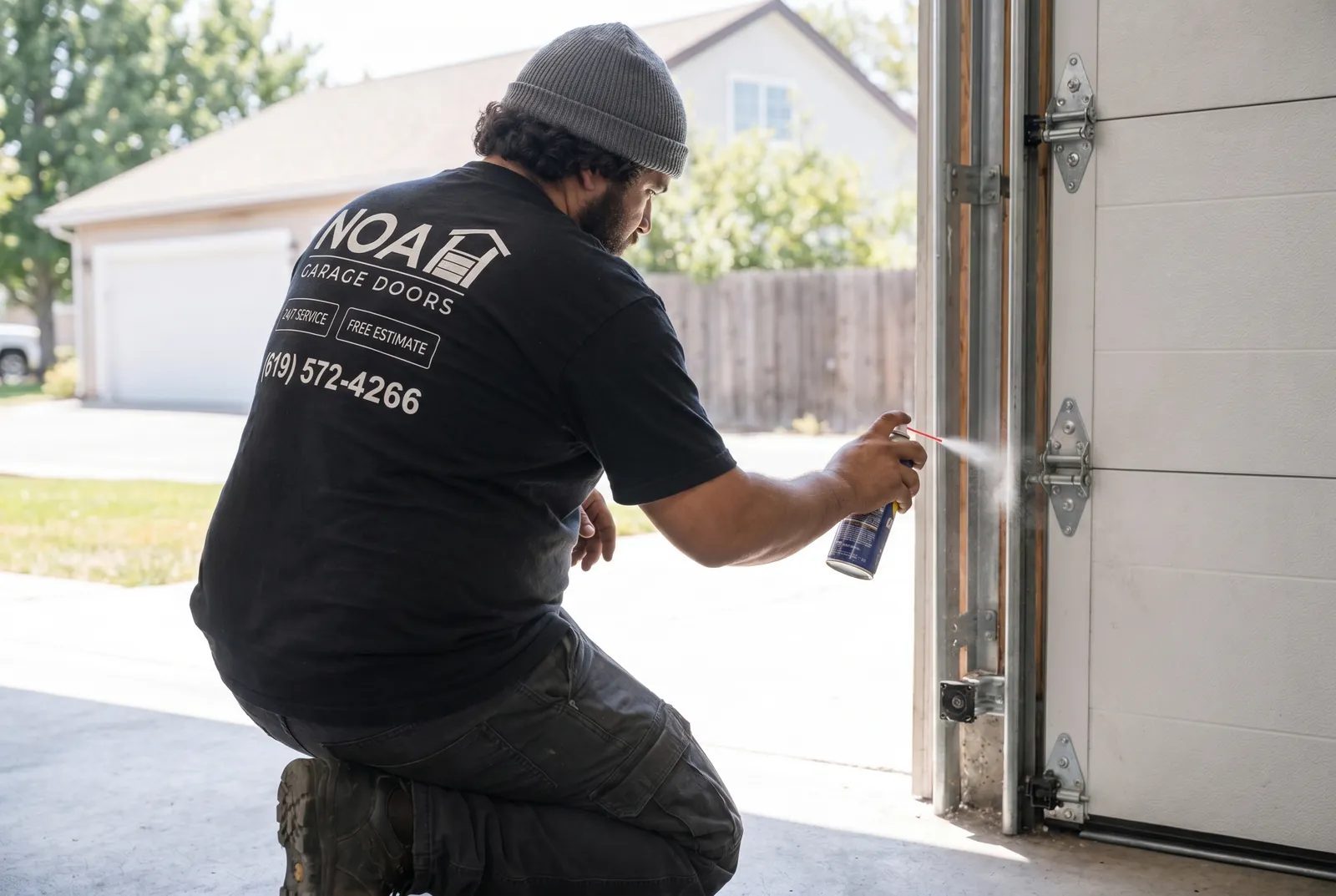
- Apply a silicone or lithium-based garage door lubricant to rollers, hinges, and the spring coils. Avoid spraying it on the track surface itself.
- Tighten any visibly loose bolts on brackets and hinges, but never touch the torsion spring or its hardware yourself.
- Listen for where the sound is coming from: the top of the door near the opener, the sides near the rollers, or the springs above the door. This helps narrow down the cause before a technician arrives.
- If the noise is accompanied by a door that hesitates, sags, or reverses unexpectedly, stop using it and call for service rather than continuing to test it.
Frequently Asked Questions About Noisy Garage Doors
A: A loud grinding or grating noise usually points to worn rollers, a misaligned track, or metal components rubbing together without enough lubrication. It can also mean the opener's gear is wearing down. We recommend having a technician inspect the rollers, track, and opener before the noise turns into a stuck or off track door.
A: Noise by itself is not usually dangerous, but it is almost always a symptom of a part wearing out, and some of those parts, like springs and cables, are dangerous when they fail. A door that suddenly gets loud after months of running quietly should be checked promptly rather than ignored.
A: A basic lubrication and tune-up typically runs $99 to $199. Roller replacement is usually $150 to $300 depending on roller type. Hinge or track repairs run $150 to $400, and opener gear or motor issues range from $125 to $350. We provide an exact, upfront quote after inspecting your door.
A: Yes, homeowners can apply a silicone or lithium based garage door lubricant to the rollers, hinges, and springs every few months. Avoid WD-40 on moving parts since it attracts dust. However, if lubrication does not quiet the door within a day or two, the noise is likely coming from a worn part that needs replacement, not just dry metal.
A noisy garage door is one of the easiest problems to ignore and one of the most useful early-warning signs your home gives you. Whether it's a quick lubrication job or a worn spring that's about to let go, catching it early in San Diego's wear-and-tear climate keeps a small fix from turning into an emergency repair at the worst possible time.
Our Garage Door Services in San Diego
About Noah Garage Doors: Locally owned and operated, serving all of San Diego County, 24/7. Call or text (619) 572-4266 or email Noahgaragedoors@gmail.com.