Garage Door Sensor Problems: Why Your Door Won't Close
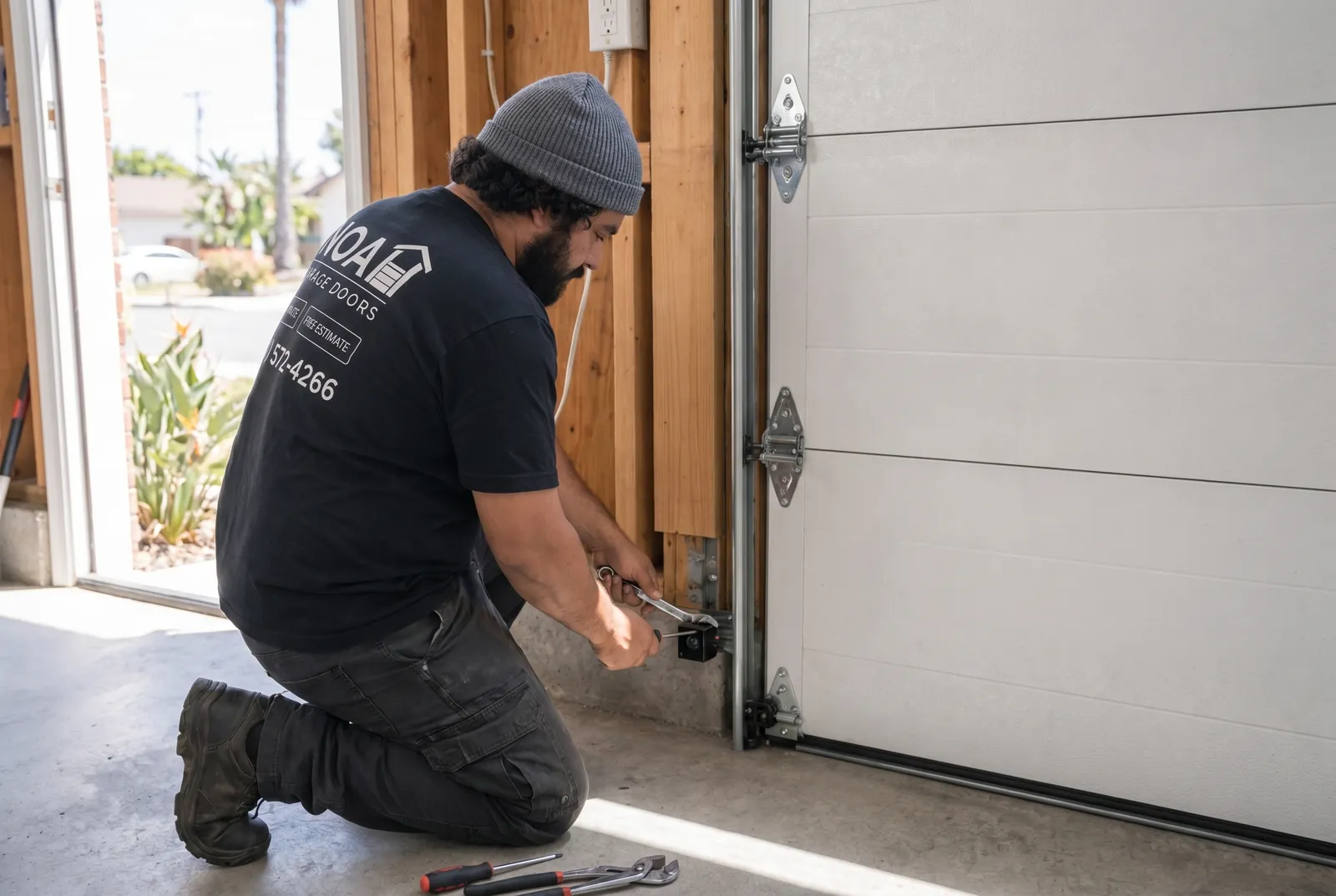
If your garage door will not close, the safety sensors are the most likely cause. When the two photo eyes near the floor are misaligned, dirty, or blocked, they break the infrared beam and the opener reverses the door instead of closing it. Cleaning the lenses and realigning the sensors until the indicator lights hold steady fixes most cases.
Garage door sensor problems are one of the most common service calls we handle across San Diego County. You press the button, the door starts to close, then immediately reverses, or it refuses to move at all while the opener light flashes. The fix is often simple, but getting there requires understanding what the sensors do and what can go wrong. This guide covers every cause we see in the field, from Mira Mesa to Chula Vista, and tells you which fixes are safe to try yourself and which need a technician.
How Garage Door Safety Sensors Work
Modern garage doors are required by federal law to include photoelectric safety sensors, also called photo eyes. Two small units sit roughly six inches above the garage floor on opposite sides of the door opening. One sensor emits a continuous infrared beam; the other receives it. As long as the beam is unbroken, the door closes normally. The moment anything interrupts the beam, including a misaligned sensor, a dirty lens, or an actual object in the path, the opener stops and reverses the door.
This safety system has been mandatory on all residential openers sold in the United States since 1993, so every home in San Diego built or updated after that point has one. The sensors are connected to the opener unit by low-voltage wiring that runs along the door tracks. That wiring, along with the sensor alignment and lens condition, is where most problems originate.
The Most Common Sensor Problems in San Diego
1. Misalignment
This is the single most frequent cause. Over time, vibration from daily door cycles, accidental bumps from a car, or even a kid's bicycle can nudge a sensor out of position. When the two sensors are no longer facing each other squarely, the beam misses its target and the door acts as if something is blocking it. You will usually see the indicator light on the receiving sensor blinking or going dark entirely. A steady green light means the beam is aligned; a blinking light means it is not.
Realigning sensors is straightforward: loosen the wing nut or bolt holding the sensor bracket, rotate the sensor housing until the indicator light goes solid, and retighten. In many cases this takes under five minutes. The challenge is keeping them aligned over time, especially in homes in San Diego neighborhoods like Rancho Penasquitos or Scripps Ranch where older garage slabs can shift slightly with seasonal moisture changes.
2. Dirty or Obstructed Lenses
San Diego's combination of marine layer humidity and dry Santa Ana winds deposits a fine film of dust, salt, and debris on sensor lenses. In coastal neighborhoods like Ocean Beach, Mission Beach, and Point Loma, salt air accelerates this buildup significantly. The beam weakens until the receiver can no longer detect it reliably. A quick wipe with a dry cloth or a soft tissue is usually enough to restore the signal. Make this part of your regular garage door maintenance routine, ideally every few months.
Spiderwebs are another frequent culprit. Garage interiors are prime spider habitat in San Diego's mild climate, and a single strand crossing the lens is enough to trigger a false obstruction reading. Check the sensor housings whenever you notice erratic behavior.
3. Direct Sunlight Interference
San Diego's bright sun creates a problem that does not exist in cloudier climates. If your garage faces south or west, afternoon or evening sunlight can shine directly into the receiving sensor and overpower its ability to detect the infrared beam. The door behaves perfectly in the morning, then suddenly refuses to close after lunch. This is not a sensor failure; it is a positioning issue. Solutions include adding small shade hoods over the sensors (available at any hardware store), adjusting the sensor angle slightly downward, or calling us to reposition the sensors where sunlight exposure is minimized.
4. Wiring Damage
The low-voltage wires running from the sensors to the opener motor unit can fray, get pinched by a door component, or be chewed through by rodents. This is more common in homes in inland areas like El Cajon and Santee, where mice and roof rats are more active. A damaged wire causes an intermittent or permanent loss of sensor signal, and the opener treats this the same as a blocked beam. Look for visible damage along the wire runs, particularly where the wire passes through staples or clips against the track. Wiring repairs should be handled by a technician to avoid creating a short or a code violation.
5. Faulty Sensor Units
Sensors do wear out, typically after ten to fifteen years of daily use. A failed sensor usually shows no indicator light at all, even after cleaning and realignment. Replacement sensors cost $20 to $50 in parts, and the total job including labor runs $95 to $200 in the San Diego market. Always replace sensors in matched pairs from the same manufacturer as your opener to ensure compatibility.
Sensor Repair vs. Replacement: What It Costs
Not every sensor problem requires new hardware. Here is a realistic breakdown of what different fixes cost in San Diego.
| Problem | Typical Fix | Estimated Cost |
|---|---|---|
| Misaligned sensors | Realignment only | $0 (DIY), or included in the repair visit |
| Dirty / blocked lenses | Cleaning | $0 (DIY) |
| Sunlight interference | Shade hood or repositioning | $0 (DIY), or $95 to $200 for sensor repair |
| Damaged wiring | Wire repair or replacement | $95 to $200 |
| Failed sensor units | Sensor pair replacement | $95 to $200 |
What Else Could Cause the Door to Reverse?
Sensors are the most common cause of a door that reverses on closing, but they are not the only one. Two other issues can produce the same symptom:
- Limit switch setting: If the close limit is set too far, the door hits the ground and the opener interprets that as an obstruction, reversing the door. Adjusting the limit screw on the opener unit resolves this.
- Broken or unbalanced spring: A broken torsion spring creates so much resistance that the opener's built-in force sensor triggers a reversal to protect the motor. If the door feels extremely heavy when you lift it manually, call a technician. Spring replacement is not a safe DIY job.
- Worn or damaged cables: A frayed or snapped garage door cable can cause the door to bind and trigger the auto-reverse. Inspect the cables visually for fraying or slack on one side.
When to Bypass the Sensors (and When Not To)
Most openers have a manual bypass: hold down the wall button continuously and the door will close even if the sensors are blocked. This is useful for confirming whether the sensor is causing the problem, but it should never become a habit. The sensors exist to prevent the door from closing on a person, pet, or vehicle. Operating the door with bypassed or disabled sensors is a safety risk and defeats required federal safety equipment. If you find yourself using the bypass regularly, schedule a repair.
If you need to close a stuck door safely right now, consider our 24/7 emergency service. We can diagnose and repair sensor problems the same day anywhere in San Diego County.
What to Check Before Calling a Technician
Run through this checklist first. Many sensor calls are resolved in minutes without a service visit:
- Look at the indicator lights on both sensors. Is one blinking or off entirely?
- Remove any objects that could be crossing the beam path: garden tools, bike tires, storage boxes placed near the door edges.
- Wipe both sensor lenses gently with a soft dry cloth.
- Check for visible wiring damage along the track.
- Try closing the door at a different time of day; if it works in the morning but not the afternoon, sunlight interference is likely.
- Loosen the sensor bracket, rotate the sensor until the indicator light goes steady, retighten.
If none of these steps resolve the issue, the problem is likely a wiring fault or a failed sensor unit. At that point, a technician visit will be faster and more reliable than further guesswork.
Frequently Asked Questions
This is almost always a safety sensor issue. The sensors are misaligned, dirty, or blocked, so the door detects a phantom obstruction and reverses. Check that both sensors have solid indicator lights, wipe the lenses clean, and make sure nothing is crossing the beam path. If the problem persists, the sensors may need realignment or replacement.
The easiest tell is the indicator lights on the sensor housings. A steady green light on the receiving sensor means the beam is aligned and unbroken. A blinking or absent light means misalignment or obstruction. You can also watch the sensor units themselves: if they are visibly angled away from each other, realign them by loosening the mounting wing nut, rotating the sensor until the light goes steady, and retightening.
Yes. In San Diego, strong afternoon and evening sun can shine directly into a south- or west-facing garage and overpower the sensor's infrared beam, causing the door to act as if something is blocking it. Shade hoods, sensor angle adjustments, or repositioning the sensors slightly can resolve this. It is a common issue in summer months when the sun sits lower in the sky.
Sensor replacement typically runs $95 to $200 including parts and labor in the San Diego area. The cost varies by opener brand and whether one or both sensors need swapping. Many sensor issues are actually alignment or wiring problems that cost less to fix. A technician can diagnose the real cause and give you an upfront quote before any work begins.
Our Garage Door Services in San Diego
About Noah Garage Doors: Locally owned and operated, serving all of San Diego County. Call or text (619) 572-4266 or email Noahgaragedoors@gmail.com.