Garage Door Won't Close in San Diego? Causes and Fixes
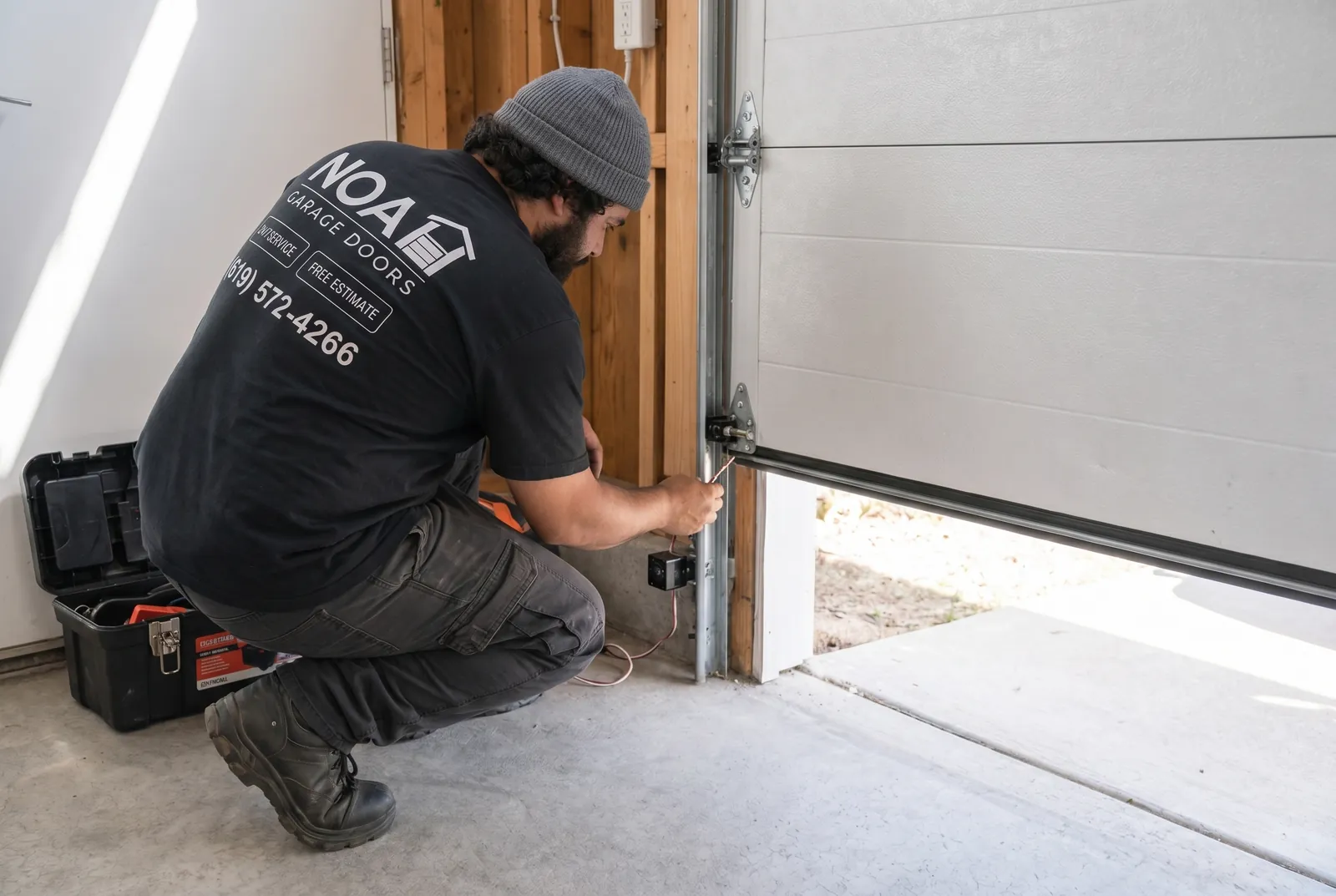
A garage door that won't close is most often caused by misaligned or dirty safety sensors near the floor. Other common causes are a broken torsion spring, bent or obstructed tracks, or a travel limit on the opener that needs adjustment. Start by wiping the sensor lenses and checking for a blinking indicator light.
A garage door that refuses to close is one of the more stressful problems a San Diego homeowner can face. Your car is exposed, your home's security is at risk, and if it happens at night or right before work, the problem cannot wait. The good news: most causes are straightforward, and a large number of them can be resolved the same day you call.
This guide walks through the top reasons a garage door won't close in San Diego, what you can safely check on your own, and when to call Noah Garage Doors at (619) 572-4266 for fast professional help.
The Most Common Reasons a Garage Door Won't Close
1. Misaligned or Dirty Safety Sensors
This is the single most frequent cause of a garage door that won't close in San Diego. Every modern garage door system has two photo-eye sensors positioned near the floor on both sides of the opening. They project an invisible beam across the doorway. If anything blocks that beam, or if either sensor is bumped slightly out of alignment, the door will refuse to close and will often reverse immediately after you press the button.
Look for a blinking or absent indicator light on one of the sensors. Dust, spider webs, and even direct sunlight hitting the sensor lens (very common in San Diego's bright climate, especially in west-facing garages during late afternoon) can cause interference. Wipe the lenses with a clean, dry cloth and gently realign the sensor until both indicator lights are solid. If that doesn't fix it, the wiring behind the sensor may be damaged, or the sensor itself needs replacement.
2. A Broken Torsion Spring
When a garage door spring breaks, the opener motor no longer has enough mechanical assistance to move the door properly. It may drop a few inches and stop, or it may refuse to move at all. A snapped spring is often preceded by a loud bang, and the door will feel extremely heavy if you try to lift it manually. Never attempt to use a door with a broken spring. The weight puts serious strain on the opener and can cause additional damage or, in worst cases, a collapse.
3. Damaged or Misaligned Tracks
San Diego's climate creates a wide temperature range between cool coastal mornings in neighborhoods like Ocean Beach or Pacific Beach and hot inland afternoons in Santee and El Cajon. This daily thermal cycling causes metal tracks to expand and contract over time. Dents, bends, or debris buildup in the track will prevent the rollers from traveling freely, and the door will stick or reverse before reaching the closed position. If your door has jumped off its tracks, stop using it immediately and call for service before the problem gets worse.
4. Travel Limit Settings on the Opener
Your garage door opener has an adjustable travel limit: a setting that tells the motor how far to move the door before stopping. If this setting drifts, the door may think it has reached the ground before it actually has, causing an immediate reversal. Many homeowners in communities like Mira Mesa and Rancho Bernardo encounter this after a power outage resets the opener's logic board. Check your opener's manual for the limit adjustment procedure, or schedule a service visit and we will handle it quickly.
5. Remote, Keypad, or Logic Board Issues
A dead remote battery is an easy-to-overlook culprit. Before anything else, try closing the door from the wall-mounted button. If the wall button works but the remote does not, replace the battery. If neither the remote nor the wall button works, the opener's logic board or internal wiring may be at fault. This points to a need for garage door opener repair or, if the unit is old, a full opener replacement.
Quick Checks You Can Do Right Now
- Check the sensor lights: Look for blinking or absent indicator lights at the base of the door frame. A solid light on both sensors means the beam is clear. A blinking light means something is wrong.
- Wipe the sensor lenses: Use a dry cloth to clean both sensor faces. Even a thin film of dust can disrupt the beam in bright sunlight.
- Try the wall button: If the door responds to the wall button but not the remote, replace the remote battery first.
- Clear the sensor area: A garden hose, rake, or pile of leaves near the base of the door can break the sensor beam. Clear the entire area around both sensors.
- Visually inspect the tracks: Walk along both sides and look for obvious dents, bends, or gaps where the rollers sit. Do not try to bend a track back by hand.
- Test the balance: With the door fully closed, pull the red emergency release cord to disconnect the opener, then try lifting the door manually. If the door is stuck open or partly open, do not pull the cord; call a technician instead. A properly balanced door should stay at any height you set it. If it crashes down or feels extremely heavy, a broken spring or snapped lift cable is likely the cause.
Services We Provide for Doors That Won't Close
Safety Sensor Repair
Realignment, wiring check, lens cleaning, and sensor replacement for photo-eye systems that block door operation.
Spring Replacement
Same-day torsion and extension spring service with the manufacturer's warranty on parts. Never a safe DIY job.
Track Repair
Straightening, realignment, or section replacement of bent vertical and horizontal tracks on both sides.
Opener Repair
Diagnosis and repair of travel limits, logic boards, motor failures, and wiring on all major brands.
Cable Replacement
Replacement of frayed or snapped lift cables so the door moves smoothly and safely again.
24/7 Emergency Service
Available around the clock across all of San Diego County for doors stuck open or that pose a security risk.
Typical Repair Costs in San Diego
Pricing depends on the specific cause, the brand and age of your door and opener, and whether parts need to be sourced. The figures below reflect typical ranges for the most common problems in the San Diego area. We always provide a clear, written quote before any work begins.
| Problem | Typical Cost (San Diego) | DIY Safe? |
|---|---|---|
| Sensor realignment or cleaning | $0 (DIY), or $95 to $200 for sensor repair | Yes |
| Travel limit adjustment | Part of opener repair, $125 to $350 | Sometimes |
| Torsion spring replacement | $220 to $450 | No |
| Track repair or realignment | $150 to $400 | No |
| Lift cable replacement | $150 to $300 | No |
| Opener logic board replacement | $125 to $350 | No |
| Full opener replacement (installed) | $450 to $950 | No |
For sensor issues and travel limit adjustments, a single service visit usually covers both diagnosis and the fix. More involved repairs, like spring or cable work, take roughly one to two hours and are always completed same-day whenever parts are available.
When to Call a Pro Instead of Going DIY
There are several situations where attempting your own repair is genuinely dangerous. Broken torsion springs are the clearest example: a single standard torsion spring stores hundreds of pounds of torque. If it releases unexpectedly during a DIY attempt, the consequences can be severe. The same caution applies to snapped lift cables, which carry similar tension.
If the door is visibly off its tracks, using it further can bend the tracks beyond repair or cause the panels to buckle. Opener wiring is another area where amateur work can damage the unit or create a hazard. The general rule: if you cannot resolve the problem by cleaning sensors, replacing a remote battery, or clearing an obvious obstruction, it is time to call Noah Garage Doors. We are available 24 hours a day, 7 days a week for emergency garage door repairs throughout San Diego County.
How San Diego's Climate Affects Your Garage Door
San Diego's coastal humidity, salt air, and inland heat accelerate garage door wear in ways that catch many homeowners off guard. In communities like Ocean Beach, Coronado, and Solana Beach, salt air corrodes metal hardware, sensor components, and springs faster than in drier inland areas. Coastal homeowners should plan on more frequent lubrication and hardware checks.
In hotter inland areas, including El Cajon, Spring Valley, and Santee, afternoon temperatures can exceed 100 degrees in summer. Steel tracks expand noticeably at those temperatures and can cause rollers to bind. Opener electronics can also hit their thermal shutoff limit, making the unit temporarily unresponsive. If your door fails to close only during the hottest part of the afternoon, heat interference is very likely the cause.
Scheduled garage door maintenance once or twice a year, including lubrication of tracks, rollers, springs, and hinges, plus a sensor alignment and balance check, dramatically reduces the risk of a failure during a heat wave or marine-layer morning. Preventive care is far cheaper than an emergency repair call.
Frequently Asked Questions
The most common causes are misaligned or dirty safety sensors, a travel limit setting that needs adjustment, bent or damaged tracks, or a failing opener. In San Diego's warm climate, heat expansion can cause tracks and panels to shift slightly, preventing a full close. Start by checking the sensors near the floor for blinking lights, then inspect the tracks for debris or dents.
Look at the two sensors mounted near the floor on each side of the door opening. If one is blinking or shows no light, the sensor beam is interrupted or misaligned. Wipe both lenses clean with a dry cloth and gently adjust the sensor angle until both indicator lights are solid and steady. If the lights are clear but the door still will not close, the sensor itself may need replacing.
Yes. In inland neighborhoods like El Cajon, Santee, and Spring Valley, summer heat can cause metal tracks to expand and bind, or cause the opener's internal components to overheat and shut down temporarily. If your door only fails to close during the hottest part of the day, heat interference is likely the cause. Lubrication and a track alignment adjustment usually resolve this.
Call Noah Garage Doors at (619) 572-4266 if the door reverses immediately every time you try to close it, if you see a broken spring or frayed cable, if the opener makes grinding or clicking noises, or if the door is visibly off its tracks. Broken springs store extreme tension and are not safe for DIY repair.
Our Garage Door Services in San Diego
About Noah Garage Doors: Locally owned and operated, serving all of San Diego County. Call or text (619) 572-4266 or email Noahgaragedoors@gmail.com.