How Long Do Garage Door Springs Last in San Diego?
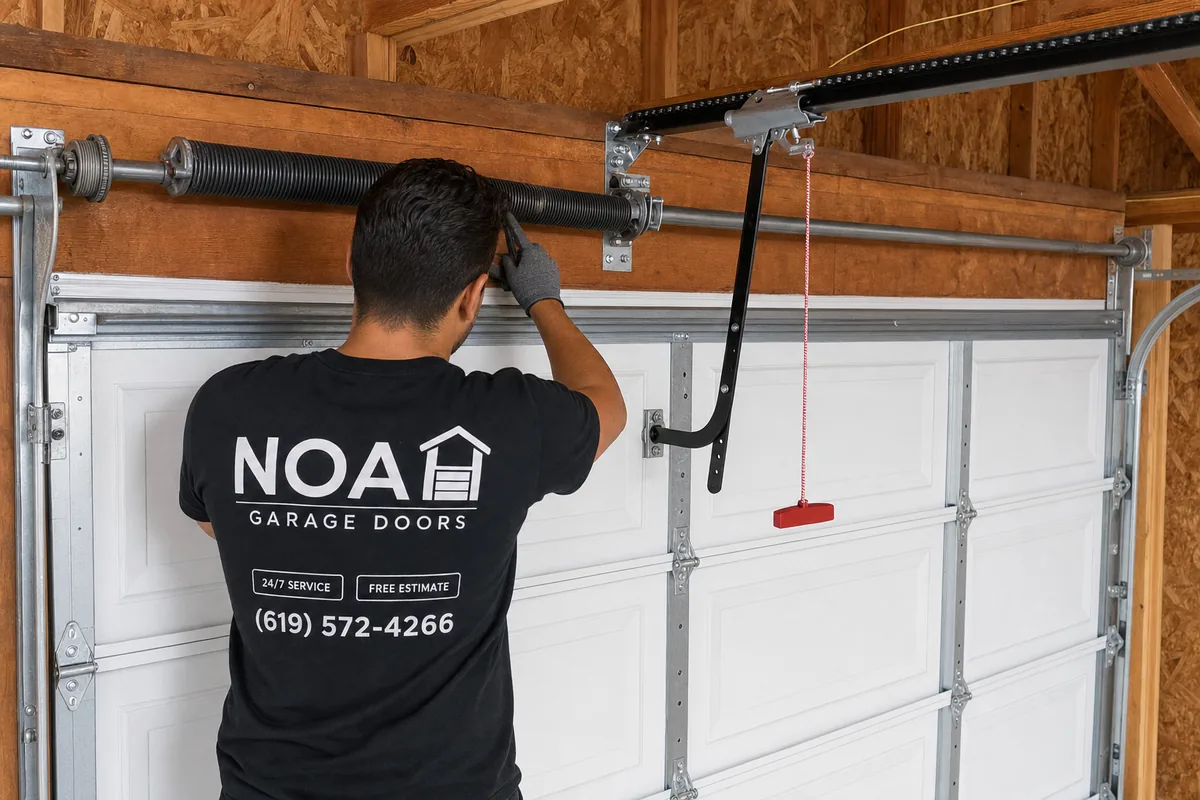
Most garage door springs last roughly 7 to 12 years. Residential torsion springs are rated for 10,000 to 15,000 cycles, which works out to about 7 to 12 years for a home that opens the door a few times a day, while extension springs tend to last closer to 7 to 10 years. San Diego's coastal salt air and inland heat can shorten that.
Garage door springs do not last forever, and most homeowners never think about them until one snaps. If you are asking how long do garage door springs last, the honest answer is it depends on the spring type, how many times a day the door cycles, and how much San Diego's coastal salt air or inland heat has worked on the coils. Understanding the rough lifespan of your springs helps you catch a failing one before it strands your car in the garage or, worse, causes an injury.
At Noah Garage Doors, replacing worn or broken springs is one of the most common calls we get, from coastal homes in Pacific Beach to inland neighborhoods in Santee and El Cajon. This guide breaks down realistic spring lifespans, what speeds up wear in San Diego specifically, and what replacement actually costs.
Average Garage Door Spring Lifespan
Garage door springs are rated by cycle count, not by years, where one cycle equals opening and closing the door once. Most residential torsion springs are built for 10,000 to 15,000 cycles. For a typical household that opens the garage two to four times a day, that works out to roughly 7 to 12 years of service. Extension springs, which stretch and contract along the horizontal tracks instead of twisting on a shaft, tend to wear a bit faster, often lasting closer to 7 to 10 years under the same usage.
Households that use the garage door heavily, such as a daily two-car commute or a garage that doubles as the main entrance, will burn through the rated cycle count sooner. A broken garage door spring is rarely a surprise if you track how often the door runs and how old the springs already are.
What Shortens Spring Life in San Diego
- Coastal salt air: Homes in Ocean Beach, Pacific Beach, Coronado, and La Jolla deal with airborne salt that accelerates surface corrosion on spring coils. Corroded coils lose tensile strength faster than clean ones, even if they look mostly intact.
- Inland heat cycling: In El Cajon, Santee, and Escondido, summer heat causes metal to expand during the day and contract at night. That repeated expansion and contraction adds metal fatigue over years of use.
- Lack of lubrication: Dry, unlubricated coils create more friction with every cycle, which wears the spring down faster than a properly maintained one. This is one of the easiest things to fix with routine garage door maintenance.
- An unbalanced door or failing opener: If the door is out of balance, or the opener motor is straining to compensate for a weak spring, the remaining good spring takes on extra load and wears out faster too.
Warning Signs Your Spring Is Near the End
Springs rarely fail without warning. Watch for these signs in the weeks or months before a full break:
- The door feels heavier when lifted by hand. A balanced door should lift smoothly with light effort. Increasing resistance usually means the spring is losing tension.
- Visible gaps or stretching in the coils. Look at the spring itself above the door. Uneven spacing between coils is a sign of fatigue.
- A loud bang or pop from the garage. This is often the sound of a spring giving out, even if the door still appears to operate.
- The door closes unevenly or jerks partway through its cycle. This can mean one spring has already failed while the other is still holding, putting all the strain on a single side.
- The opener strains, reverses, or struggles. Openers are not designed to lift a door's full weight alone. If the motor is working harder than usual, the spring is likely not doing its share.
If your door has come off its tracks after a spring failure, do not try to force it back into place. A broken spring under tension is one of the more dangerous DIY repairs in the home, and it is best left to a trained technician.
Garage Door Spring Replacement Costs in San Diego
Spring replacement cost depends on the spring type, door size, and whether one or both springs need to be replaced. Here is what we typically see across San Diego County:
| Service | Typical Cost | Time to Complete |
|---|---|---|
| Single torsion spring replacement | $220 - $450 | Same day, 1-2 hours |
| Pair of torsion springs (standard door) | $380 - $650 | Same day, 1-2 hours |
| Extension spring replacement (pair) | Quoted after inspection | Same day, 1-2 hours |
| Heavy-duty or oversized door springs | Quoted after inspection | Same day, 1.5-3 hours |
These are general estimates. We provide an upfront, honest quote on-site before any work begins, so there are no surprises on your invoice.
Why Replace Both Springs Together
Even Wear, Even Failure
Springs installed at the same time wear down at a similar rate, so a second failure is usually not far behind the first.
One Visit, Lower Total Cost
Replacing both during a single appointment avoids a second repair visit months later.
Balanced Door Operation
Matched springs keep the door lifting evenly on both sides, reducing strain on rollers, cables, and the opener.
Manufacturer's Spring Warranty
Spring replacements from Noah Garage Doors are backed by a manufacturer's warranty for added peace of mind.
Extending the Life of Your Springs
Regular maintenance is the simplest way to get the full rated life out of your springs, and sometimes longer. Lubricating the coils once or twice a year, keeping the door properly balanced, and avoiding letting the door sit in a partially open position for long periods all reduce unnecessary strain. If you are unsure how long it has been since your springs were inspected, a quick maintenance visit can tell you whether they have years left or are due for replacement soon. If a spring does fail unexpectedly, our 24/7 emergency repair service can usually get Noah out the same day.
Frequently Asked Questions
A: Most torsion springs are rated for 10,000 to 15,000 cycles, which works out to roughly 7 to 12 years for a household that opens the door three to five times a day. Extension springs typically last a bit less, often closer to 7 to 10 years. Heavy daily use wears through the cycle count faster.
A: Salt air along the coast in neighborhoods like Pacific Beach, Ocean Beach, and Coronado speeds up corrosion on spring coils, weakening the metal faster than dry inland air. Inland heat in El Cajon and Santee makes metal expand and contract, adding fatigue. Lack of lubrication, an unbalanced door, or a straining opener also shorten spring life.
A: Common warning signs include a door that feels noticeably heavier when lifted by hand, a loud popping or snapping sound, visible gaps or stretching in the spring coils, and a door that closes unevenly. If your opener strains or reverses unexpectedly, the spring is likely near the end of its life and should be inspected.
A: If your door has two torsion springs and one has broken, we almost always recommend replacing both. They wear down at a similar rate, so the second is usually close to failure too. Replacing both in one visit costs less than a second service call later, and keeps the door balanced.
Our Garage Door Services in San Diego
About Noah Garage Doors: Locally owned and operated, serving all of San Diego County. Call or text (619) 572-4266 or email Noahgaragedoors@gmail.com.