Belt Drive vs Chain Drive Garage Door Opener: Which Is Best for San Diego Homes?
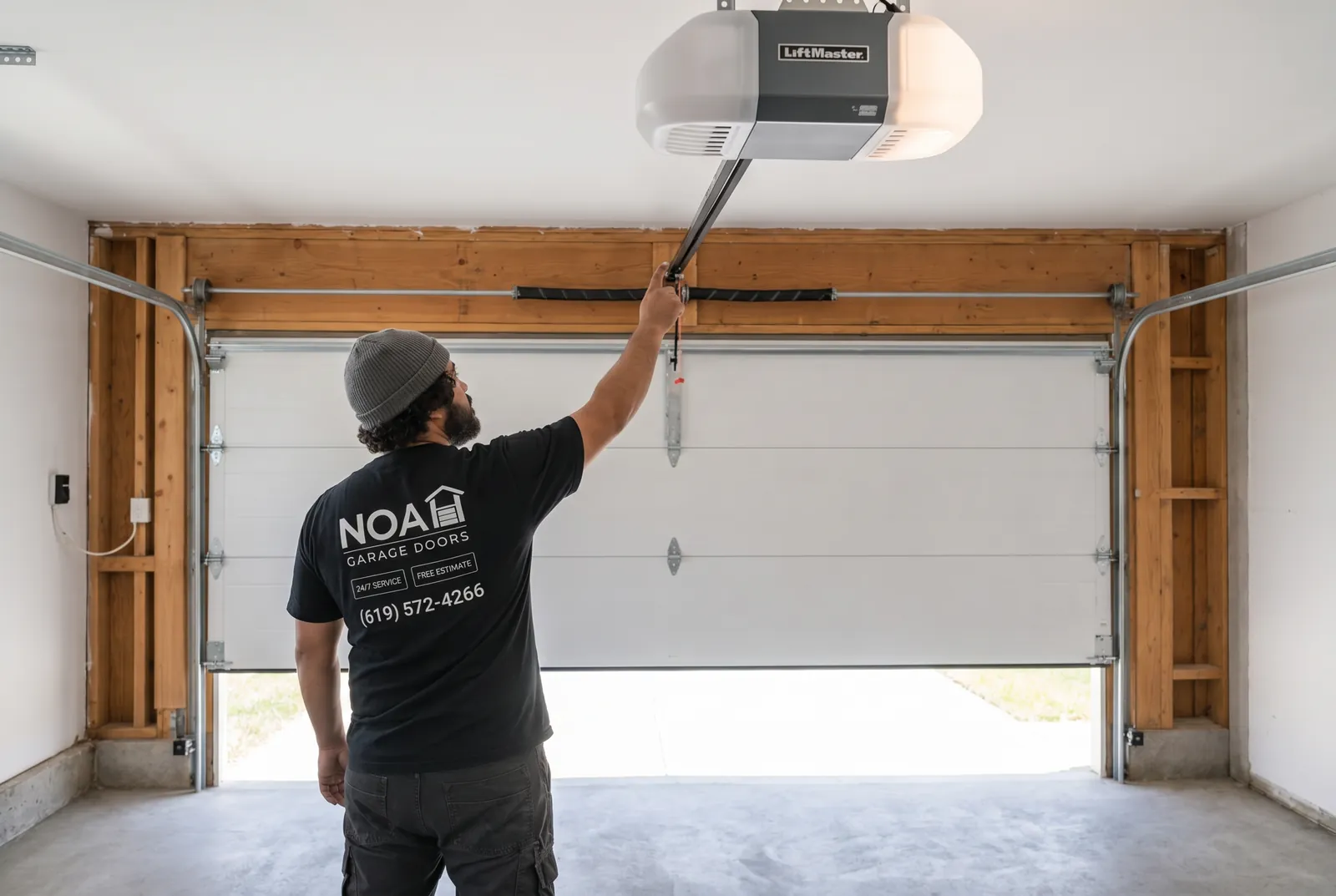
When your garage door opener finally gives out, you will likely be choosing between two options: a chain drive or a belt drive. Both are the most common residential types installed across San Diego County, and both do the job well. The difference is in how they feel to live with, day in and day out. This guide covers everything that matters so you can make a confident choice before the technician arrives.
The short version: belt drives are quieter and better for attached garages or coastal neighborhoods. Chain drives cost a bit less and work perfectly well in detached garages and most inland areas. Read on for the full breakdown, including a head-to-head comparison and real San Diego pricing.
How a Chain Drive Opener Works
A chain drive opener moves the trolley along the rail using a metal chain, much like a heavy-duty bicycle chain. The chain wraps around a sprocket connected to the motor. When you press the button, the motor turns the sprocket, which pulls the chain and moves the trolley to raise or lower the door.
Chain drive openers have been the standard for decades. They are rugged, proven, and typically cost a bit less than belt drive models at the same horsepower rating. Replacement parts are widely available, and any experienced technician across San Diego County can service them quickly.
The trade-off is noise. That metal-on-metal operation produces a distinctive clanking and vibration that travels through the garage structure and into the home. In a detached garage in Santee or Spring Valley, it rarely matters. But in many San Diego homes, where the garage sits directly beneath a bedroom or shares a wall with a living room, the noise becomes a real quality-of-life issue, especially for early risers or late-night arrivals.
How a Belt Drive Opener Works
A belt drive opener uses the same basic rail and trolley system as a chain drive, but the chain is replaced by a reinforced rubber or polyurethane belt. Because there are no metal links grinding together, the operation is almost silent: you hear the motor hum, but the characteristic clatter and vibration are gone.
Belt drive openers have become the default choice in newer construction across neighborhoods like Carmel Valley, Otay Ranch, and Scripps Ranch, where attached garages are the norm and master bedrooms often sit directly above them. Builders and homeowners alike find that the silence pays for itself quickly in fewer complaints and better sleep.
Beyond noise, belt drives offer a practical advantage in San Diego's coastal communities. Without a metal chain, there is one fewer component susceptible to rust from the salt air that rolls in off the Pacific. Homes near the water in La Jolla, Pacific Beach, Ocean Beach, and Encinitas benefit from that reduced corrosion risk over the life of the opener.
Chain vs Belt Drive: Side-by-Side Comparison
| Feature | Chain Drive | Belt Drive |
|---|---|---|
| Noise Level | High: audible clanking and vibration | Low: near-silent operation |
| Initial Cost | Lower (typically $50 to $100 less at unit level) | Slightly higher |
| Maintenance | Chain needs periodic lubrication | Belt needs virtually no lubrication |
| Durability | Excellent: 10 to 15+ years with care | Excellent: 10 to 15+ years with care |
| Rust Risk (Coastal) | Higher: metal chain can corrode near ocean | Lower: no metal drive components to rust |
| Best For | Detached garages, inland areas, budget buyers | Attached garages, coastal homes, noise-sensitive spaces |
Both types are available with modern features such as Wi-Fi connectivity, battery backup (required for all new residential opener installs in California since 2019), and smartphone app control. The drive type does not limit what technology package you can choose.
Which Type Is Right for Your San Diego Home?
Three questions settle this for most homeowners:
Is your garage attached to living space?
If you have rooms directly above or adjacent to the garage, a belt drive is the right call. The silence difference is immediate and real. Families with infants, people who keep different schedules, and homeowners who simply value peace and quiet all notice it. A chain drive in an attached garage is not a problem, but once you have lived with a belt drive, the chain sounds noticeably rough.
Are you in a coastal neighborhood?
Salt air accelerates corrosion on any exposed metal. If your home is within several miles of the Pacific coast, including areas like Mission Beach, Coronado, Cardiff, Del Mar, or Oceanside, a belt drive removes the metal chain from your corrosion risk list. You will still want to lubricate hinges, rollers, and springs on a regular maintenance schedule, but the opener drive itself stays clean.
Is your garage detached, and does budget matter?
A chain drive is a smart, capable choice for a detached garage. The noise does not reach the living areas, and the lower cost is real money back in your pocket. Inland communities like El Cajon, Lakeside, Lemon Grove, and Spring Valley are natural fits. The chain drive will serve you well for many years as long as you keep it lubricated and have the door balanced and inspected periodically.
One thing both types handle equally: lifting force. Neither has a meaningful edge for a standard residential sectional door. If your door is heavy, heavier motor horsepower matters more than chain-versus-belt. And if your door is struggling because of a worn or broken spring rather than an opener problem, no new opener will fix that: springs do the heavy lifting, and the opener just moves the trolley.
What Does Opener Replacement Cost in San Diego?
Whether you choose a chain or belt drive model, a complete garage door opener replacement, including the new unit and professional installation, runs $450 to $950 in San Diego County. Where your job lands in that range depends on the motor horsepower, brand, and feature set, including whether the unit includes a battery backup and Wi-Fi capability.
The difference between a chain and belt drive unit of the same specifications is typically $50 to $100 at the manufacturer level. That gap closes further when you factor in installation, which is identical for both types. For most homeowners, the belt drive's silence is worth the modest premium.
If your existing opener just needs a repair rather than full replacement, opener repair typically runs $125 to $350 depending on what failed. Common issues include worn drive gears, failed logic boards, and broken trolley carriages. We diagnose the problem honestly: if a repair makes sense, we say so. If the unit is at end of life, we will tell you that too, with no pressure.
California's 2019 battery backup law applies to all new opener installs in homes with attached garages. If you do not already have a battery backup unit, your replacement opener will include one. This adds a small amount to the cost but means your door works during a power outage, which matters more than most people expect until the first time it does not.
Frequently Asked Questions
For most San Diego homeowners with an attached garage, yes. The quieter operation makes a real difference if you have bedrooms above or adjacent to the garage. The price gap between belt and chain models is modest, and the silence is noticeable from the first use.
Chain drives need periodic lubrication of the chain to prevent noise, stretch, and wear, similar to maintaining a bicycle chain. Belt drives need virtually no lubrication and generally require less ongoing attention. Both types benefit from an annual inspection of the safety sensors, door balance, and all moving hardware.
Both belt and chain drive openers are built to last 10 to 15 years or more with normal use. In coastal areas, a belt drive has a slight edge because there is no metal chain to corrode from salt air. In inland areas like Poway, El Cajon, or Escondido, either type holds up equally well.
Yes. We carry both chain and belt drive openers from leading manufacturers and can handle most residential installations same-day across San Diego County. Call (619) 572-4266 for a free estimate and we will bring the right unit to your door.
Our Garage Door Services in San Diego
About Noah Garage Doors: Locally owned and operated, serving all of San Diego County. Call or text (619) 572-4266 or email Noahgaragedoors@gmail.com.