Garage Door Repair in La Mesa, CA
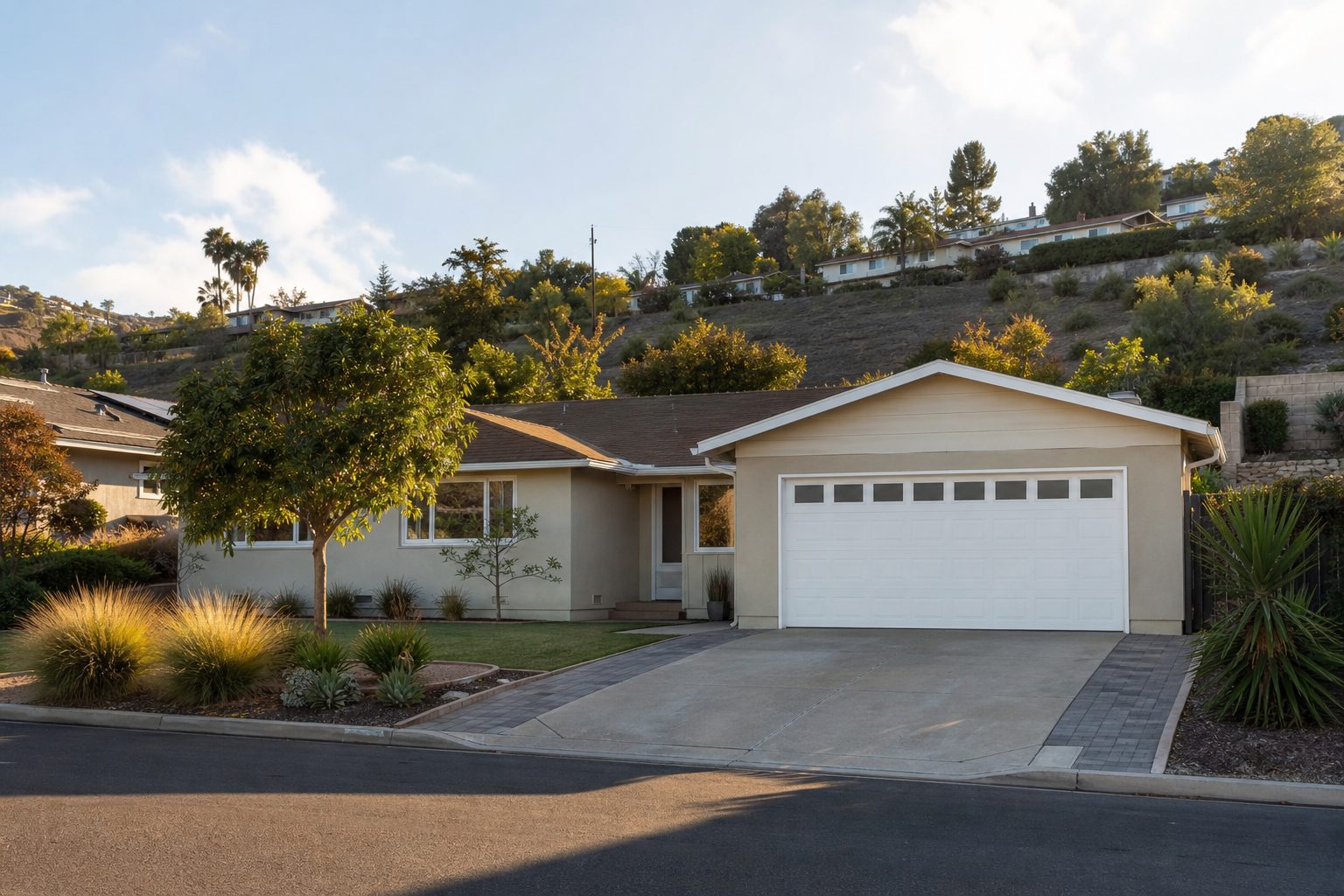
Noah Garage Doors repairs garage doors throughout La Mesa, and we specialize in the older, non-standard doors this city is full of: undersized and odd openings, wood doors that change weight with the seasons, low headroom conversions, and hillside garages in Mount Helix and Fletcher Hills. We cover springs, openers, cables, and off-track doors, and we are available 24/7.
La Mesa was largely built out before the tract home era. The streets around La Mesa Village and the old Depot, the bungalows in Rolando, the older parts of Grossmont, and the hillside lots on Mount Helix and up through Fletcher Hills mostly date from the 1920s through the 1960s, with 1970s and 1980s infill filling the gaps.
That history shows up in the garage doors. Compared with the newer tracts out toward Santee or the master planned communities in the South Bay, La Mesa doors are older, heavier, smaller, and much less standardized. Two houses on the same block can have completely different openings, spring systems and headroom. Most of what makes a La Mesa repair go wrong is somebody assuming the door is a standard size when it is not.
Why La Mesa Garages Are Their Own Category
A modern tract garage is predictable. A 16 by 7 steel sectional door, a torsion bar over the header, twelve inches of headroom, a chain drive on the ceiling, and parts a supply house stocks by the pallet. Show up with the standard kit and you can finish the job.
La Mesa does not work that way. Between Massachusetts Avenue and Jackson Drive, along Baltimore Drive, up around Helix High School and out toward Casa de Oro, we run into single car openings narrower than modern stock, ceilings that leave a few inches above the door instead of a foot, real wood doors that have been repainted a dozen times, garages detached at the back of the lot off an alley, and slabs that were poured to follow a hillside.
The practical consequence is simple. On a La Mesa door, the measurements come first. Door weight, opening width and height, headroom, backroom and side room all get checked before any part gets specified, because guessing from a chart produces a door that is out of balance or hardware that does not fit.
Odd and Undersized Door Openings
Standard sizes today are 8 by 7 and 9 by 7 singles and 16 by 7 doubles. In La Mesa's older housing stock we regularly find openings that are none of those: singles narrower than eight feet, openings shorter than seven feet in the oldest garages, 15 foot doubles instead of 16, and pairs of narrow single doors side by side where a modern build would have put one double.
Why it matters mechanically:
- Door height sets the track and drum size. A shorter than standard opening does not take standard seven foot track, and the cable drums have to match the actual door height or the door climbs unevenly and pulls itself out of square.
- Spring sizing is calculated from real door weight. Wire diameter, inside diameter and spring length all follow from what the door actually weighs, which on an old door is rarely what a chart says it should weigh.
- Old framing has moved. Openings framed in fir or redwood decades ago settle. If the header is no longer level, the door gets shimmed and the track set to the opening as it is now, not forced to fit.
An unusual opening is not a reason to replace a door. It is a reason to measure it properly. If a replacement really is the better answer, our new garage door installation page covers what that involves.
Wood Doors and What Goes Wrong With Them
La Mesa has more surviving wood doors than most of the county, both original sectional wood doors on older homes and newer real wood or wood clad carriage style doors on remodeled hillside properties. Wood behaves differently from steel, and almost all of its problems come back to weight and fasteners.
The door's weight changes through the year
Wood takes on moisture through the damp winter months and dries out again in summer. A wood door that balanced perfectly in September can drift or feel heavy in February, because the springs are counterbalancing a weight that has changed. That is not a broken spring, it is a door that needs rebalancing, and it is one of the more common calls we get from Mount Helix and the older Village streets.
Paint adds real weight
Ten coats of paint on a large wood door is meaningful added mass. If somebody has just repainted and the door suddenly will not hold position halfway, the springs are now undersized for the door. It has to be reweighed and re-sprung, not just cranked tighter.
Hinges strip and bottom rails rot
Hinge and end hinge screws pull out of soft old wood, which lets sections rack and puts the rollers at an angle in the track. Bottom rails soak up water where the door meets a damp slab and eventually go soft, which is also where the bottom fixture bolts live. Longer fasteners, backing plates, and replacing the bottom rail or the bottom section handle most of this.
There is a point where a sixty year old wood door costs more to keep alive than to replace, and we will tell you when yours has reached it rather than selling another round of repairs.
Low Headroom, Tight Backroom, Detached Garages
Not enough room above the door
A standard torsion assembly wants roughly a foot of clear space above the opening. Plenty of older La Mesa garages have rafters, ductwork or a storage loft leaving far less than that. There are two normal solutions. A low headroom conversion uses double horizontal track and mounts the torsion assembly at the rear instead of over the header. Alternatively a wall mount, or jackshaft, opener drives the torsion shaft from the side and clears the ceiling entirely, which also gets the rail out of the way of a loft. Both are covered on our garage door opener page.
Detached garages off the alley
The Village and Rolando have a lot of garages sitting at the back of the lot with alley access. Two things come up over and over. First, power: many run off one old circuit or, worse, an extension cord, which is not a stable supply for an opener motor. Second, age: some of these still have openers old enough to predate photo eye safety sensors. Federal safety requirements have called for photo eyes on residential openers since 1993, so a unit without them is both very old and missing the feature that reverses the door on a person or a pet underneath it. On those, replacement is normally the right call rather than another repair.
Hillside Driveways in Mount Helix and Fletcher Hills
Mount Helix, Fletcher Hills, the streets climbing above Grossmont, and much of Casa de Oro are hillside lots with short, steep or curved driveways. That geometry causes a specific set of garage door problems.
The floor is not level with the door
Garage slabs on sloped lots are often not square to the door header. The bottom seal then meets an uneven floor, leaving daylight at one corner while the other corner is tight. Worse, a door closing onto a high spot in the slab hits resistance and the opener reads it as an obstruction and reverses back up. The fix is not to crank up the closing force, which defeats a safety feature. It is some combination of correcting the down limit, fitting an adjustable or taller bulb bottom seal that can take up the gap, and in some cases adding a threshold seal at the floor.
Tight backing angles
Steep and short driveways mean awkward backing angles and more contact between bumpers and the door. Bent bottom brackets, bent vertical track and popped rollers are routine here, and a door that has jumped its track should not be forced back with the opener. See off track door repair.
Runoff heads for the garage
A driveway that pitches down toward the garage sends winter rain straight at the bottom panel. That is exactly where wood rots and steel rusts through, and it is why the bottom section and the bottom fixtures are the first thing we look at on a hillside property. Frayed lift cable at the bottom bracket is the failure to catch early, and it is described on our cable repair page.
What We End Up Doing on La Mesa Doors
Six repairs account for most of our La Mesa calls.
Re-springing a non-standard door
Weighing the actual door and specifying wire size, inside diameter and length to match, instead of fitting whatever a chart suggests. Manufacturer's warranty on new springs.
Wood door hinges and bottom rail
Stripped hinge screws, racked sections, and soft bottom rails on older wood doors. Repaired with longer fasteners, backing plates or a new bottom section.
Rebalancing after a season change or a repaint
Wood doors change weight through the year, and fresh coats of paint add more. The door gets reweighed and the springs matched to it.
Low headroom conversion
Double horizontal track with a rear mounted torsion assembly, or a wall mount opener that clears the ceiling entirely in a garage with rafters or a loft.
Replacing a pre photo eye opener
Common in detached alley garages in the Village and Rolando. Openers that old are missing the safety reverse sensors and are usually past repairing.
Sealing to an out of level slab
Adjustable bottom seals and threshold seals to close the gap on a hillside garage, plus correcting a down limit that is causing nuisance reversals.
The underlying services are covered in more depth on our spring repair, opener, cable, off track and maintenance pages. If a door has failed with a car trapped inside, that is what 24/7 emergency repair is for.
Pricing on an Older La Mesa Door
The table below is a starting point, not a quote. On an older La Mesa door the honest answer is that somebody has to look at it, because a non standard opening or a wood door changes which parts are even usable. You get a firm number before anything is touched.
| Service | Estimated Cost Range |
|---|---|
| Broken Spring Replacement (standard) | $220 - $450 |
| Garage Door Opener Repair | $125 - $350 |
| Cable Replacement (pair) | $150 - $300 |
| Roller Replacement (full set) | $150 - $300 |
| Off-Track or Track Repair | $150 - $400 |
| Safety Sensor Repair/Replacement | $95 - $200 |
| Basic Tune-Up & Lubrication | $99 - $199 |
Doors with unusual openings, wood construction or a low headroom conversion sit at the upper end or above these ranges, because the parts are specified rather than stocked. All new springs we install carry a manufacturer's warranty.
La Mesa Garage Door Questions
Usually yes. Older La Mesa garages often have openings narrower or shorter than stock sizes, or a 15 foot double instead of 16. Springs are sized from the door's actual weight, and track and drums are matched to the real opening height. That means measuring before ordering parts, but a non standard opening is not a reason to replace the door.
Usually the door's weight. Wood takes on moisture in the wet months and dries out in summer, so the same door can weigh more in winter, and the springs are then counterbalancing the wrong weight. A fresh repaint adds permanent mass the same way. Reweigh the door and match the springs to what it weighs now.
Yes. Two approaches work in tight older garages. A low headroom conversion uses double horizontal track and moves the torsion assembly to the rear rather than over the header. Or a wall mount opener drives the torsion shaft from the side of the opening, which removes the ceiling rail completely and is a good answer when rafters, ductwork or a storage loft are in the way.
On hillside lots in Mount Helix and Fletcher Hills it is more often the slab than the door. Floors on sloped lots are often not level with the header, leaving daylight at one corner, and the opener reads the high spot as an obstruction and reverses. The fix is correcting the down limit and fitting an adjustable or taller bottom seal, not turning up the closing force, which is a safety setting.
About Noah Garage Doors: Locally owned and operated, serving La Mesa, Mount Helix, Fletcher Hills, Casa de Oro, Grossmont and all of San Diego County. Based in San Diego, CA. Call or text (619) 572-4266 or email Noahgaragedoors@gmail.com. Available 24/7.