DIY vs Professional Garage Door Repair: When to Call a Pro
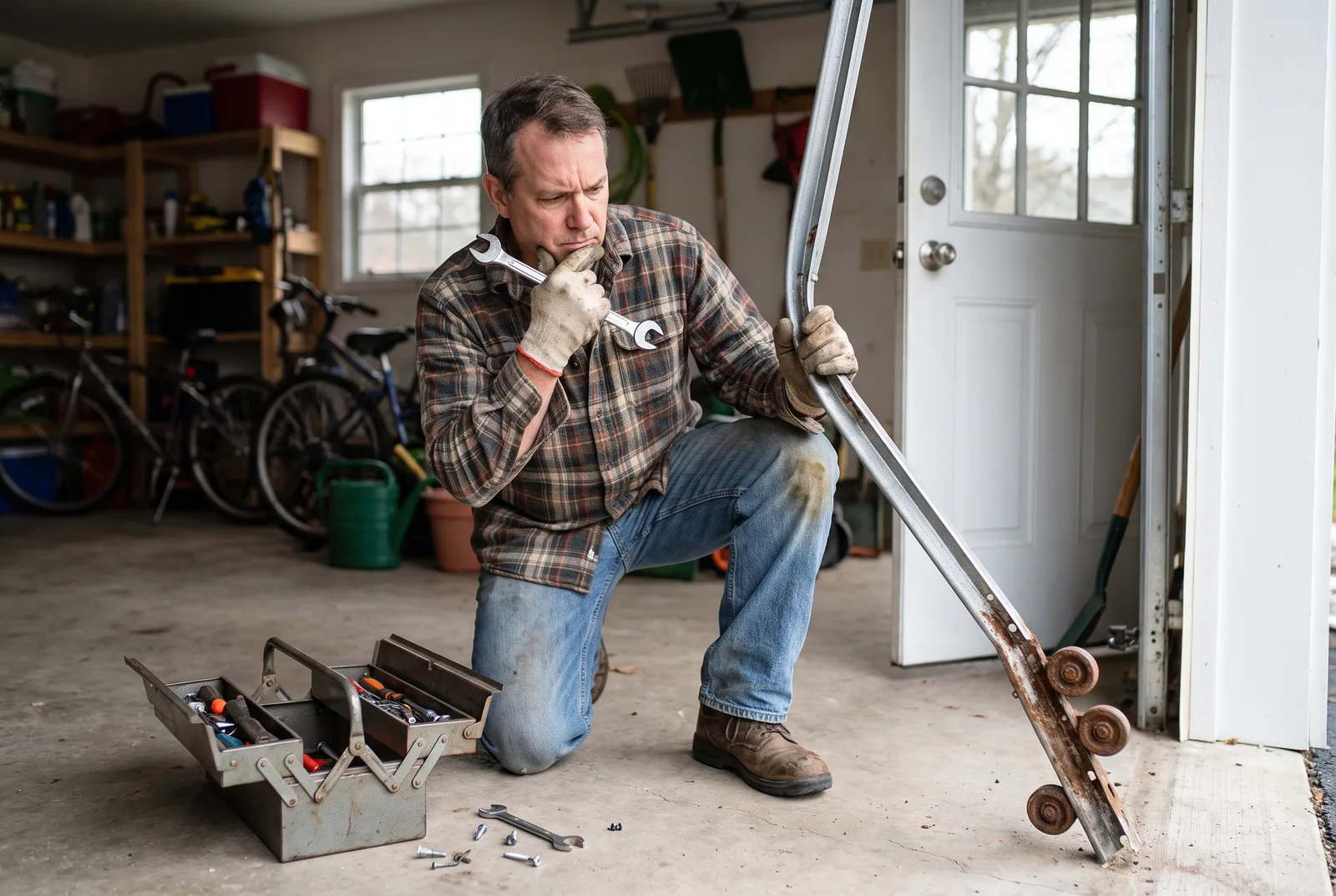
DIY vs professional garage door repair is a question San Diego homeowners face every time something goes wrong with their door. The answer depends almost entirely on which part failed. Some tasks, like lubricating rollers or cleaning photo-eye sensors, are genuinely safe for a homeowner to handle on a weekend afternoon. Others, particularly anything involving springs, cables, or a door that has jumped its tracks, carry real risks of injury or significant property damage that make professional service the clearly better call.
Getting this decision right matters in San Diego's climate. Salt air from coastal neighborhoods like Ocean Beach and La Jolla accelerates corrosion on springs and cables, while the dry inland heat of El Cajon and Santee bakes lubricants out of rollers and hinges faster than you might expect. Staying on top of the safe maintenance tasks extends the life of every component. Knowing which repairs to leave alone protects your safety and your budget.
DIY Garage Door Tasks That Are Safe to Do Yourself
A handful of maintenance tasks involve no high-tension components and fall well within the skill range of most homeowners. These are worth doing regularly, especially in San Diego where the coastal environment puts extra stress on metal parts.
Lubrication
Apply a silicone spray or white lithium grease to rollers, hinges, and the torsion bar. Do not spray the tracks. A $10 to $15 can covers a full door and reduces noise and wear significantly. Avoid WD-40, which strips grease rather than adding it.
Photo-Eye Sensor Cleaning
If your door reverses unexpectedly or refuses to close, wipe the sensor lenses with a dry cloth and check that both sensors are aligned. No tools needed. This fixes a surprising number of "broken door" calls.
Auto-Reverse Safety Test
Place a 2x4 flat on the ground under the center of the door and press close. The door should reverse when it contacts the board. If it does not, call a professional. This is a monthly safety check every homeowner should perform.
Visual Inspection
Look for worn or cracked rollers, frayed cables, rust on springs, or bent track sections. Spotting a problem early typically means a smaller repair bill. Never touch a frayed cable or bent spring directly.
These tasks take under an hour and require no specialized tools. Doing them every six months, or every three months for doors in Coronado or Mission Beach where salt air is heavier, keeps the mechanical components in better shape and reduces the chance of a sudden failure.
Repairs That Always Need a Professional
Several garage door repairs are dangerous without specialized tools and training. The following jobs should never be attempted as DIY projects, regardless of your general mechanical ability.
Broken or Worn Springs
Torsion springs are wound under hundreds of pounds of tension. A broken garage door spring that releases suddenly can cause serious injury: broken bones, deep lacerations, or worse. This is the leading cause of severe garage door injuries in the US. Getting the spring tension right after installation also requires experience. An incorrectly wound spring makes the door lopsided, overloads the opener motor, and often fails prematurely.
Cable Replacement
The lift cables carry the full weight of your door and are also under tension. A garage door cable that snaps or releases unexpectedly can whip back with enough force to cause injury. Cables also need to be wound onto the drum at the correct tension and angle, which requires tools and experience to do safely.
Off-Track Repairs
A door that has jumped its tracks is held in place only by the remaining cable tension and friction. Trying to force it back exposes you to the full weight of the door, often 150 to 250 pounds, if anything slips. Off-track door repair involves releasing the cable tension safely before realigning the door, a step that requires the right tools and training.
Major Opener Repairs
If your garage door opener is grinding, making a burning smell, or has a broken drive chain or belt, the repair involves electrical components and precise mechanical adjustments. Guessing at the problem can damage the opener further or create a safety hazard.
The Real Cost Comparison: DIY vs Professional
One reason homeowners consider DIY is cost. The table below puts the numbers in context using 2026 San Diego market rates for professional service.
| Repair | San Diego Professional Cost (2026) | Safe for DIY? |
|---|---|---|
| Lubrication and basic maintenance | $99 to $199 (tune-up) | Yes, DIY with the right products |
| Safety sensor repair or replacement | $95 to $200 | Cleaning and alignment: yes. Replacement: call a pro |
| Torsion spring replacement (single spring) | $220 to $450 | No. High injury risk |
| Torsion spring replacement (double door) | $380 to $650 | No. High injury risk |
| Cable replacement (pair) | $150 to $300 | No. Tension hazard |
| Off-track door repair | $150 to $400 | No. Door weight and tension hazard |
| Opener repair | $125 to $350 | Minor adjustments only; most repairs need a pro |
| Opener replacement (with installation) | $450 to $950 | Professional installation recommended |
For lubrication and sensor cleaning, DIY makes clear financial sense. For spring and cable work, the apparent savings are smaller than they look once you factor in the specialized winding tools required, the time involved, and the risk that an incorrect repair creates a bigger problem within weeks. A botched spring job that leads to a broken opener or a door falling off the track can turn one repair into two or three.
What Goes Wrong with DIY Garage Door Repairs
Every garage door professional in San Diego has a version of the same story: a homeowner tried to save money on a spring and ended up with a larger repair bill, a more damaged door, or an injury. The most common DIY mistakes are predictable and preventable.
Incorrect Spring Tension
A torsion spring wound with the wrong number of turns makes the door operate unevenly. One side of the door rises faster than the other, the opener strains against the imbalance, and the spring itself wears out faster. Getting the tension right requires knowing the door's exact weight and the spring's wire diameter, inside diameter, and length, then calculating the correct number of turns. This is not a measurement-and-guess process.
Skipping the Paired Component
When one torsion spring breaks, the other is usually near the end of its life. The two springs age together and are typically replaced as a set. Similarly, when one lift cable shows significant wear, both cables are often replaced at the same time. A homeowner who replaces only the failed part often calls for service again within a few months when the second component goes. A professional evaluates both and advises accordingly, so the job gets done right the first time.
Using the Wrong Lubricant
WD-40 is the most common DIY lubrication mistake on garage doors. It is a solvent, not a lubricant, and it strips the existing grease from rollers, chain drives, and bearings. Use silicone spray or white lithium grease only, applied sparingly to rollers, hinges, and the torsion bar. Avoid the tracks entirely.
Forcing a Stuck Door
A door that will not open or close is stuck for a reason: a broken spring, a detached cable, a roller off its track, or an opener that has reached its travel limit. Forcing the door manually in any of these situations bends tracks, strips the opener's drive gear, or pulls cables completely off the drum. What started as one repair becomes several. The right move is always to identify the cause before applying any force.
When to Call Noah Garage Doors
Noah Garage Doors serves all of San Diego County, from Chula Vista and National City in the south to Carlsbad and Oceanside in the north, with same-day appointments available 24/7. Noah handles springs, cables, openers, off-track doors, and full door replacements.
If you have performed the safe DIY checks and the door still is not working correctly, or if any spring or cable component looks worn, frayed, or has already failed, call or text (619) 572-4266 for a same-day assessment. We provide upfront written pricing before any work begins, and all parts carry a manufacturer's warranty.
For Poway, Rancho Bernardo, and Mission Hills homeowners who want to stay ahead of problems, our garage door maintenance service covers lubrication, tension adjustment, a full safety inspection, and sensor testing for $99 to $199. Catching a worn roller or a spring showing fatigue before it fails is the most cost-effective garage door service there is.
For situations that cannot wait, including a door stuck open overnight, a broken spring that leaves you unable to use your garage, or a door that has fallen off its tracks, we offer 24/7 emergency garage door repair across San Diego County.
Frequently Asked Questions
No. Garage door spring replacement is one of the most dangerous repairs a homeowner can attempt. Torsion springs operate under extreme tension and can snap violently if handled incorrectly. In San Diego, professional torsion spring replacement costs $220 to $450 for a single spring and $380 to $650 for a double door. The cost covers not just the part but also the trained labor to wind and tension the new spring safely.
Safe DIY tasks include lubricating rollers, hinges, and the torsion bar with a silicone spray or white lithium grease, cleaning the photo-eye sensors with a dry cloth, testing the auto-reverse feature by placing a 2x4 under the door, and visually inspecting for worn rollers or frayed cables. Anything involving springs, cables, or significant opener repair should be handled by a professional.
For lubrication and basic maintenance, the cost is just supplies, typically under $20. For parts-heavy repairs, savings are smaller than they appear. The right tools, time required, and the risk of a more expensive fix if something goes wrong often erase the apparent savings. For spring and cable work, professional service in San Diego is the safer and more economical long-term choice.
Call a professional immediately if a spring has broken, a cable has snapped or come off the drum, the door has jumped its tracks, or the opener is making grinding or burning smells. These problems involve high-tension components that are unsafe to handle without proper training and tools. San Diego homeowners can reach Noah Garage Doors 24/7 at (619) 572-4266 for same-day service.
Our Garage Door Services in San Diego
About Noah Garage Doors: Locally owned and operated, serving all of San Diego County. Call or text (619) 572-4266 or email Noahgaragedoors@gmail.com.