How to Measure for a New Garage Door
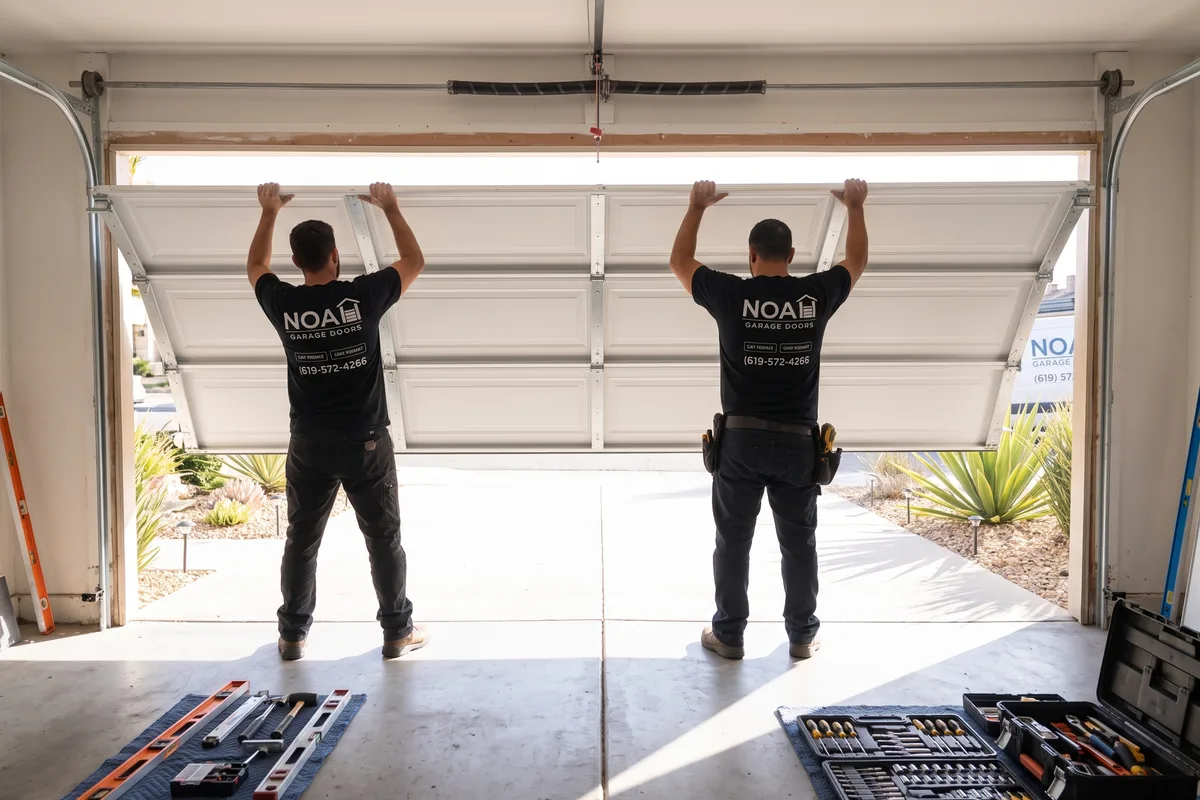
Ordering a new garage door with the wrong measurements is one of the most expensive mistakes a San Diego homeowner can make. A door that is even a few inches too wide will not fit the frame. A door that is too narrow leaves gaps along the sides that let in weather, dust, and pests. Getting the numbers right takes less than 20 minutes with a tape measure and a notepad, and it saves you from a costly return and a delayed installation.
I measure openings all across San Diego County every week, from modern attached garages in Carmel Valley and Rancho Bernardo to older detached garages in North Park, Logan Heights, and Golden Hill. The process is the same everywhere, though older construction from before 1970 regularly turns up non-standard dimensions and modified framing that require custom hardware. This guide walks you through every measurement you need before you buy.
Tools and Preparation
You need three things: a steel tape measure at least 25 feet long, a notepad or your phone to record each number, and a helper if the opening is wide. Use a steel tape, not a cloth measuring tape. Cloth tapes stretch over longer spans and give readings that are off by half an inch or more, which is enough to cause a fit problem with a pre-built door panel.
Write each measurement in inches rather than feet and fractions. A number like 192 inches is cleaner and easier to check than 16 feet 0 inches. Take each dimension two or three times from slightly different positions and use the smallest reading as your governing number. Openings are rarely perfectly square, and the tightest spot determines what will fit.
If an existing door is still in place, measure the rough framing behind it rather than the door panel itself. An old door may have been incorrectly sized when it was installed, and duplicating that mistake just continues the problem.
Measure the Width and Height
Width: Measure the rough opening width from the inside face of the left side jamb to the inside face of the right side jamb. Take three readings: one near the floor, one at mid-height, and one near the top of the opening. Use the smallest of the three as your governing width measurement.
Standard single-car door widths in San Diego are 8, 9, and 10 feet. The most common width for homes built after 1980 is 9 feet. Standard double-car door widths are 14, 15, and 16 feet, with 16 feet being the most common in newer construction. Homes built before 1960, especially in neighborhoods like Bankers Hill, South Park, and Mission Hills, often have 8-foot or non-standard openings from an era when cars were narrower and garages were smaller.
Height: Measure the rough opening height from the floor to the underside of the header, which is the horizontal framing member across the top of the opening. Take one reading on each side and use the smaller number. The floor is almost never perfectly level, so measuring from the lowest point prevents a gap at the bottom of the closed door.
Standard door heights are 7 feet and 8 feet. A 7-foot door is the most common height in San Diego residential garages. An 8-foot door is popular with homeowners who park taller trucks, SUVs, or vans and need extra clearance. If your measurement falls between standard heights or if the header appears to have been modified, note that when you call: custom heights are available but add cost and lead time.
Side Room and Headroom
Side room is the clearance between the edge of the rough opening and the nearest wall, pillar, or permanent obstruction on each side. Measure both the left and right sides separately, since they are often different. Standard torsion spring hardware and horizontal track brackets need at least 3.5 inches of side room on each side. If either side has less than that, low-side-room hardware options can work with as little as 2 inches, but they limit your choice of opener styles and hardware configurations.
While checking side room, also look for obstructions within 12 inches of each side jamb: electrical panels, water heaters, exposed plumbing, or permanent shelving. These do not necessarily stop the project, but they need to be accounted for in the hardware plan and may need to be relocated before installation begins.
Headroom is the vertical distance from the top of the rough opening to the ceiling or the lowest point of any obstruction directly above the door. Measure on both sides and at the center. Ceilings in older San Diego garages are often not perfectly flat, and a beam or pipe on one side can reduce the usable headroom significantly.
Standard garage door hardware requires a minimum of 10 to 12 inches of headroom for the torsion spring bar to sit above the door and for the horizontal track to begin its run. Low-headroom conversion kits can work with as little as 4 to 6 inches of clearance, but they add cost and limit which opener models are compatible. If your headroom is under 10 inches, mention that when you call: I bring low-headroom hardware on jobs where it is expected so we do not have to reschedule.
Backroom Depth
Backroom, sometimes called track depth, is the horizontal distance from the face of the opening to the back wall of the garage. When the door opens, the panels travel up the vertical track, pivot, and then lie flat on the horizontal ceiling track. That horizontal run needs to be at least as long as the door is tall, plus several inches for the opener drive rail.
For a standard 7-foot door, plan for at least 9 to 10 feet of backroom to accommodate the panels, the opener rail, and a few inches of clearance past the door when fully open. An 8-foot door needs roughly 10 to 11 feet. If your garage is unusually short from front to back, such as in some converted or detached garages in Hillcrest and parts of Clairemont, a wall-mount (jackshaft) opener eliminates the overhead track entirely and recovers that interior depth. Check our page on garage door openers for details on wall-mount and compact-rail models.
Also note any ceiling obstructions directly overhead: exposed water heater flue pipes, lighting fixtures, or storage brackets mounted close to the ceiling. These may need to be relocated when the opener rail is installed, and knowing about them ahead of time prevents surprises on installation day.
New Garage Door Cost in San Diego
Once you have your measurements, you can compare door options with real numbers. The table below shows 2026 installed price ranges for San Diego County. Every figure includes the door panels, hardware, a properly sized torsion spring system matched to the door weight, and standard installation labor. Old door removal and disposal are included in every job.
| Configuration | Installed Price Range (2026) |
|---|---|
| Single-car door (8 or 9 ft wide) | $1,200 to $2,800 |
| Double-car door (14, 15, or 16 ft wide) | $1,800 to $4,500 |
| Opener replacement (added at same time) | $450 to $950 |
If your existing opener is compatible with the new door and the motor is in good shape, we can transfer it and save you the replacement cost. Compatibility is checked at the start of every job and communicated before any work begins. If the motor is nearing the end of its useful life or does not meet the torque rating for the new door weight, we explain that and give you an honest choice before touching anything.
Common Mistakes to Avoid
The most common measurement mistake is recording the size of the existing door rather than the rough opening. If the previous door was undersized or oversized when it was installed, and many older San Diego garages have exactly this situation, recording the panel dimensions repeats the error. Always measure the framed opening, not the door sitting in it.
The second most common mistake is measuring in only one spot. Rough openings shift over time, especially along the San Diego coastal zone where marine moisture cycles and dry Santa Ana wind conditions cause constant, minor movement in wood framing. Take at least two width readings, one near the top and one near the bottom, and two height readings, one on each side. Use the smaller number in each dimension.
A third mistake is forgetting the garage floor. San Diego driveways typically slope toward the garage to drain water, and the transition from driveway to garage floor is often uneven. If the floor dips on one side, measure height from the low point so the door does not ride too high and leave a gap under the seal. A threshold seal can be added to close minor gaps, but the door height must still be sized from the lowest point.
Finally, note any irregularities you find. In neighborhoods like Golden Hill, University Heights, and parts of National City, I regularly find that previous owners reduced the opening width to add a workshop partition, modified the header height, or installed non-standard tracks. None of those situations are deal-breakers, but they change which hardware will work and what the job will cost. A photo of anything unusual shared before I arrive makes the visit faster and more accurate. After your new door is in place, routine garage door maintenance every six to twelve months keeps springs, rollers, and cables in good shape for the long term.
Frequently Asked Questions
You need five key measurements: rough opening width, rough opening height, left side room, right side room, and headroom above the opening. For opener installation, also measure the backroom depth and total ceiling height to confirm the track will clear.
Non-standard openings are common in older San Diego homes, especially in neighborhoods like North Park, South Park, and Mission Hills. Most manufacturers offer custom sizing for an added cost. Call Noah at (619) 572-4266 for a free on-site assessment and an accurate custom quote.
Standard garage door hardware requires a minimum of 10 to 12 inches of headroom above the top of the opening. Low-headroom conversion kits are available for ceilings with as little as 4 to 6 inches of clearance, but they add cost and limit which opener types will work.
A new garage door installed in San Diego costs $1,200 to $4,500. A single-car door runs $1,200 to $2,800 installed, and a double-car door runs $1,800 to $4,500. The final price depends on door size, material, insulation level, and whether a new opener is included.
Our Garage Door Services in San Diego
About Noah Garage Doors: Locally owned and operated, serving all of San Diego County. Call or text (619) 572-4266 or email Noahgaragedoors@gmail.com.