Insulated vs Non-Insulated Garage Doors: Is It Worth It in San Diego?
When you're shopping for a new garage door in San Diego, one question comes up almost every time: does insulation actually matter here? After all, San Diego isn't Minnesota. The winters are mild, the summers are warm but rarely extreme by national standards, and plenty of homeowners assume the insulation choice is a minor detail. That assumption often turns out to be wrong, especially depending on where in the county you live and how you use your garage. Here's a practical, honest breakdown of the difference between insulated and non-insulated garage doors and what that choice means for a San Diego home.
What Makes a Garage Door "Insulated"?
A standard, non-insulated garage door is a single layer of steel, aluminum, or wood. It keeps weather out and provides a physical barrier, but offers almost no thermal or acoustic resistance. When the sun beats on it all afternoon, that heat radiates straight through to the inside of your garage.
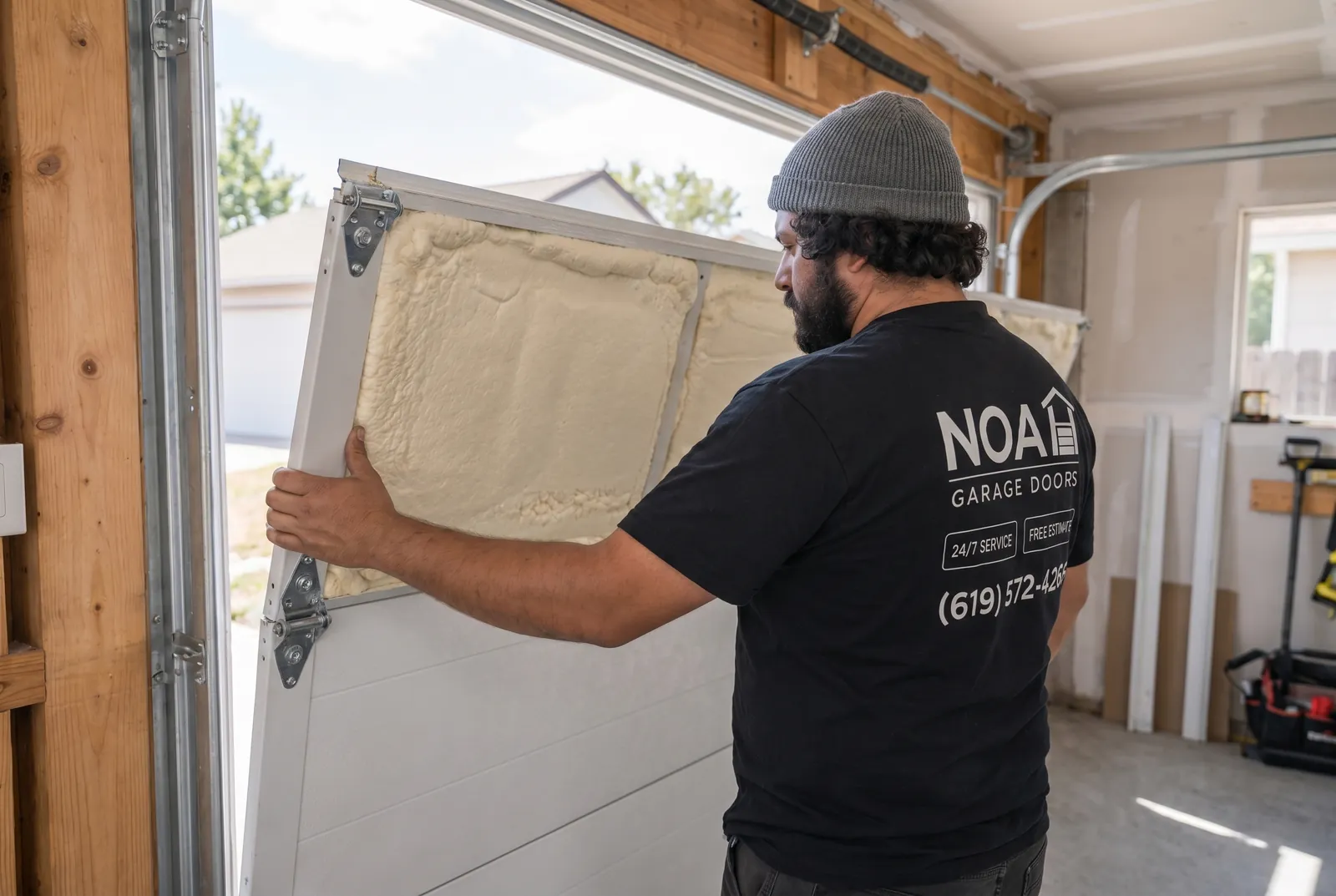
An insulated door adds one or two layers of material, typically polyurethane foam or polystyrene panels, sandwiched between the exterior and interior door skins. The density and thickness of that core determines the door's R-value, a measure of thermal resistance. Higher R-values mean better insulation.
There are three common constructions:
- Single-layer (no insulation): One sheet of steel or aluminum. R-value of zero. Lightest and least expensive.
- Two-layer: A foam or polystyrene backer is added to the inside of the outer steel skin. R-values typically range from R-6 to R-9. More rigid than a single-layer door and noticeably quieter.
- Three-layer: A full steel interior panel is added, sandwiching the foam core. R-values range from R-10 to R-18 or higher. This is the most durable and acoustically effective construction, and it is what most replacement door jobs in San Diego use today.
For most San Diego homeowners replacing an existing door, a three-layer construction hits the right balance of cost, durability, and performance.
San Diego's Climate and Why It Matters
San Diego has one of the most temperate climates in the United States, but that does not mean your garage holds at a comfortable 72 degrees year-round. Several local climate factors affect whether insulation pays off.
Coastal neighborhoods
Areas like La Jolla, Pacific Beach, Ocean Beach, and Encinitas deal with the marine layer. Morning fog, consistent ocean breezes, and elevated humidity keep summer temperatures cooler than inland zones, but the moisture and salt air accelerate corrosion on unprotected metal surfaces. A three-layer insulated door adds an interior steel skin that shields the foam core from salt-air moisture, extending the door's useful life.
Inland valleys
El Cajon, Santee, and parts of Escondido, Lakeside, and Spring Valley regularly hit triple-digit temperatures in late summer. If your garage is attached to the house, an uninsulated steel door becomes a radiator in the afternoon, pushing heat directly into the adjacent living space and forcing your air conditioning to work harder. An insulated door with R-10 or higher reduces that heat transfer significantly.
Santa Ana wind season
From October through February, hot, dry Santa Ana winds sweep across San Diego County from the northeast. These events drive rapid temperature swings, sometimes 30 to 40 degrees in a matter of hours. An insulated door buffers those swings better than a single-layer door, which is relevant for anyone using the garage as a workspace, gym, or hobby space.
UV exposure
Southern California's intense sun degrades paint and finishes faster than most regions. Three-layer doors typically use thicker steel and factory-applied finishes that hold up better under prolonged UV exposure, reducing the frequency of repainting or recoating.
Benefits of an Insulated Garage Door
Beyond thermal performance, insulated doors offer several advantages that matter in everyday San Diego use:
Energy Efficiency
Reduces heat transfer through the garage wall into your home, easing the load on your air conditioning during summer afternoons in inland zip codes.
Noise Reduction
The foam core absorbs street noise, traffic, and the sound of the door itself opening and closing. Especially useful near I-805, I-5, or SAN airport flight paths.
Increased Durability
Three-layer construction is more rigid and resists denting better than a single panel. Heavy objects, errant basketballs, and minor vehicle bumps are less likely to leave permanent marks.
Workspace Comfort
If you use your garage as a workshop, gym, or studio, an insulated door makes the space usable in summer months rather than unbearably hot in the afternoon.
There is also a practical maintenance benefit: because insulated doors are heavier and more rigid, they put less stress on the hardware during operation. The panels flex less as the door cycles through its path, which means hinges, rollers, and tracks tend to stay aligned longer. Routine garage door maintenance every six to twelve months still matters, but the intervals between adjustments are typically longer with a three-layer door.
When a Non-Insulated Door Makes Sense
A non-insulated door is a perfectly reasonable choice in several situations:
- Detached garage used only for storage. If the garage does not connect to your living space and you are not spending time in it, the thermal and acoustic benefits of insulation matter less. A single-layer or two-layer door is a cost-effective option here.
- Budget is the primary constraint. If you need a functional door now and plan to upgrade in a few years, a non-insulated replacement door gets the job done without the premium cost of a three-layer product.
- RV port or open-sided structure. Covered carports and partially open structures lose any thermal benefit regardless of door insulation. A lightweight single-layer door is easier to operate and maintain in these configurations.
- Temporary solution before a full renovation. If you are planning a full garage conversion or addition, a lower-cost door that will be replaced anyway is a sensible interim choice.
The key question to ask yourself: is the garage attached to your house, and do you spend any meaningful time in it? If the answer to either part is yes, the upfront cost difference of insulation typically pays back in comfort and reduced energy use within a few years.
Cost Comparison: San Diego 2026
The table below shows 2026 installed price ranges for a new garage door in San Diego County. Every figure includes the door panels, hardware, a torsion spring system matched to the door weight, and standard installation labor. Old door removal and disposal are included. Insulated (three-layer) doors tend to fall toward the higher end of each range; non-insulated (single-layer) doors toward the lower end.
| Configuration | Installed Price Range (2026) |
|---|---|
| Single-car door (8 or 9 ft wide), installed | $1,200 to $2,800 |
| Double-car door (14, 15, or 16 ft wide), installed | $1,800 to $4,500 |
| Opener replacement (added at same time) | $450 to $950 |
Within those ranges, the difference between a non-insulated and a three-layer insulated door in the same style and size is typically a few hundred dollars. For most homeowners in San Diego, that gap closes quickly when you factor in reduced cooling costs and the comfort of a quieter, more temperature-stable garage.
If your existing opener is compatible with the new door and the motor is in good working order, we can transfer it and save you the replacement cost. Compatibility is checked at the start of every job and communicated before any work begins. If the motor is approaching the end of its useful life or does not match the torque rating for a heavier insulated door, I explain that and give you an honest choice before touching anything.
Frequently Asked Questions
They can, especially in attached garages in inland areas like El Cajon, Santee, or Escondido where summer temperatures regularly exceed 90 to 100 degrees. The garage acts as a thermal buffer between your living space and the outdoors, and an uninsulated door forces your air conditioning to work harder. In milder coastal neighborhoods, the savings are smaller but still real, particularly for garages used as living or working space.
For most San Diego homes, an R-value of R-10 to R-13 is a practical choice. This level, found in most three-layer steel doors, provides solid thermal performance without the premium cost of high-end R-18 doors. If your garage is detached and used only for storage, even an R-6 two-layer door is a meaningful upgrade over a single-layer door.
Yes. The foam core in an insulated door absorbs sound, which is noticeable for garages near busy roads, highways, or the airport flight paths that cross parts of San Diego. The improvement is most pronounced with a full three-layer door, where the interior steel panel adds additional mass. Many homeowners mention this as a surprise benefit after installation.
No. The repair process for an insulated door, including springs, cables, rollers, and the opener, is essentially the same as for a non-insulated door. The doors are heavier, which affects spring sizing, but that is accounted for at installation. Standard maintenance such as lubricating hinges and rollers and checking the weather seal applies equally to both door types.
Our Garage Door Services in San Diego
About Noah Garage Doors: Locally owned and operated, serving all of San Diego County. Call or text (619) 572-4266 or email Noahgaragedoors@gmail.com.