7 Signs You Need a New Garage Door in San Diego
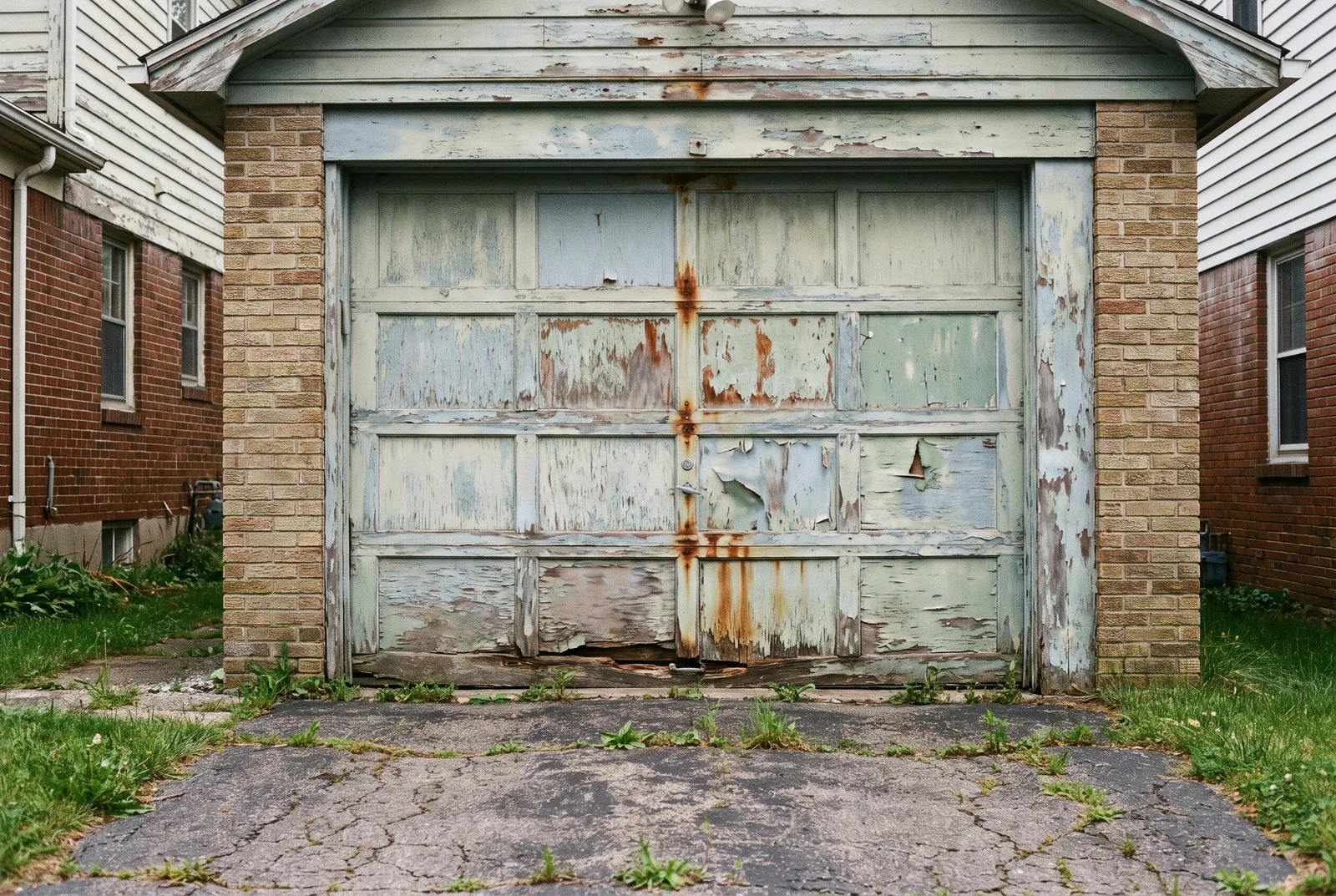
San Diego's mild climate is easy on a lot of things, but it is not easy on garage doors. The UV exposure here is intense year-round, and coastal neighborhoods from Ocean Beach to La Jolla add salt air to the mix. Most doors last 20 to 30 years, but plenty of them hit the wall at 15. The question homeowners in Chula Vista, El Cajon, Poway, and throughout the county ask me most often is: do I repair this or replace it?
The honest answer is that most problems, from a broken spring to a stripped cable, are repairs. A broken torsion spring is one of the most common failures I see, and it is almost always worth fixing on a door that is otherwise in good shape. But some combinations of age, damage, and cost cross the line where replacement is the smarter financial move. Here are the seven signs that tell me a door has reached that point.
Sign 1: The Door Is More Than 20 Years Old
Age alone is not a reason to replace a garage door. I have worked on doors in Escondido and Santee that are pushing 25 years and still operate cleanly. The question is whether the door's age has started showing up in the way it moves and sounds.
At 20-plus years, most steel doors have gone through enough thermal cycling and UV exposure that the paint is chalking, the bottom seal has cracked, and the panels have developed small stress fractures at the corners. More importantly, the torsion springs are statistically near the end of their rated lifespan. If the spring breaks on a door that old, I will give you a straight comparison: the spring repair cost vs. what a new door would run. On a door that is otherwise structurally sound, the spring replacement is usually still worth it. On a door that is showing multiple symptoms, the math often flips.
Sign 2: Structural Damage or Warped Panels
A single cracked or dented panel can sometimes be replaced if the manufacturer still makes that model. For doors older than 15 years, that is rarely the case. Discontinued door lines mean discontinued parts, and hunting down a single matching panel for a 2008 door is usually a dead end.
Warped panels are a different problem. Steel panels warp when the galvanized coating breaks down and moisture gets underneath, which happens faster on homes near the water in Coronado or Pacific Beach. A warped panel changes the geometry of the door, puts uneven stress on the tracks and hinges, and eventually causes binding and off-track failures. If more than one panel is warped, the door is telling you something.
Sign 3: Repairs Are Adding Up Fast
A good rule of thumb: if you have spent more than $500 on repairs in the past two years on the same door, or if a single upcoming repair is going to cost more than 40 percent of what a new door would cost, it is worth at least getting a replacement quote before committing to the fix.
Cable replacement runs $150 to $300. A spring repair on a single-spring system runs $220 to $450. Those are reasonable costs on a door that has years of life left. Stack three of those in 18 months on a door from the early 2000s, and you are essentially paying to keep a tired door alive instead of investing in one that will perform well for the next 20 years.
Sign 4: The Door Is Seriously Out of Balance
A properly balanced garage door, when disconnected from the opener and lifted by hand to about waist height, should stay put. If it falls or flies up on its own, the spring system is not correctly tensioned for the door's weight. That imbalance puts the opener motor under constant stress, wears out the rollers and bearings faster, and eventually tears up the tracks.
Springs can be re-tensioned or replaced to correct balance on most doors. But if the door is warped, if the tracks are bent, or if the door has been running off-balance for years and the hardware has taken the punishment, the underlying structure may no longer be worth investing in. Severe imbalance on an old door is usually the point where I start the replacement conversation.
Sign 5: Visible Rust or Corrosion
Surface rust on a steel door can be sanded, primed, and painted, and if you catch it early, it is purely cosmetic. What you cannot fix is rust that has eaten through the steel itself. Panel perforation, rusted-through hinges, and corroded bottom brackets are structural problems.
This is especially relevant for homes in the coastal communities. I replace more corroded doors in La Jolla, Ocean Beach, and Coronado than in any inland zip code. Salt air accelerates the process, and a door that looks fine on the street side may have heavy corrosion on the inside face where condensation pools. If you are not sure, lift the door and look at the inside surface of the bottom panels. That is where corrosion starts on coastal doors.
Sign 6: Poor Insulation and High Energy Bills
San Diego's climate is mild enough that insulation is not always a priority, but an attached garage with an uninsulated door loses a surprising amount of conditioned air. If your garage shares a wall with a bedroom, a home office, or a living area in neighborhoods like Carmel Valley, Rancho Bernardo, or La Mesa, the thermal gap matters.
Older single-layer steel doors have essentially no insulation value. Replacing one with a modern insulated two-layer or three-layer door makes a real difference in how the adjacent rooms feel. The comfort improvement is most noticeable in summer, when San Diego's inland areas like El Cajon and Santee see regular highs in the 90s, and an uninsulated garage acts as a heat sink against your living space. This is not a repair situation. You cannot add meaningful insulation to an existing door without replacing it.
Sign 7: Safety Features No Longer Work Reliably
Modern garage doors are required to auto-reverse when they contact an obstruction or when the photo-eye sensors detect an object in the path. Older doors, especially those installed before the 1993 federal safety standards took effect, may not have functional auto-reverse at all, or the sensors may have degraded to the point where they cannot be relied on. That is a genuine safety risk, particularly in homes with children or pets.
If the sensors are failing repeatedly or the auto-reverse is inconsistent, sometimes the fix is a new opener. But if the door itself is the issue, with bent tracks that misalign the sensors, or panels that have shifted enough to interfere with the closing path, the door is the root problem. A full safety inspection will tell you which it is.
Repair vs. Replace: A Quick Cost Guide
Here is how the numbers compare for common repairs versus a full replacement in San Diego. Use this to frame the conversation when getting quotes.
| Service | Typical San Diego Price (2026) | Worth It When |
|---|---|---|
| Torsion spring replacement (single) | $220 to $450 | Door is under 20 years old, structurally sound |
| Torsion spring replacement (double/double door) | $380 to $650 | Door is under 20 years old, structurally sound |
| Cable replacement (pair) | $150 to $300 | First cable failure, door otherwise healthy |
| Tune-up and safety inspection | $99 to $199 | Preventive; catches problems before they compound |
| New single-car door installed | $1,200 to $2,800 | Door is 20+ years old, damaged, or failing repeatedly |
| New double-car door installed | $1,800 to $4,500 | Door is 20+ years old, damaged, or failing repeatedly |
One thing worth knowing: new garage door installation consistently ranks among the top home improvement investments for resale value in Southern California. If you are planning to sell a home in the next few years, a new door in San Diego is rarely money you regret spending.
Frequently Asked Questions
If your door is under 15 years old and one specific part has failed, a repair usually makes more sense. If the door is older than 20 years, has multiple problems at once, shows widespread rust or structural damage, or the repair cost is approaching half the price of a new door, replacement is typically the smarter move. A free assessment from Noah will give you a straight comparison.
A new garage door installed in San Diego costs $1,200 to $4,500. A single-car door runs $1,200 to $2,800 installed, and a double-car door runs $1,800 to $4,500. Those ranges cover the door, hardware, a new torsion spring system, removal of the old door, and installation labor.
A quality steel garage door lasts 20 to 30 years in San Diego with basic maintenance. The springs and opener typically wear out first, around 10 to 15 years, and can be replaced independently. Coastal homes near the ocean in areas like La Jolla, Ocean Beach, or Coronado may see faster corrosion on steel doors, so material choice matters more there.
Sometimes, but only if the replacement panels are still manufactured for your exact door model and the frame and tracks are structurally sound. For doors older than 15 years, matching panels is often impossible because the manufacturer no longer makes them. In those cases, a full door replacement is the only real option, and it usually costs less than hunting down discontinued parts.
Our Garage Door Services in San Diego
About Noah Garage Doors: Locally owned and operated, serving all of San Diego County. Call or text (619) 572-4266 or email Noahgaragedoors@gmail.com.