Broken Garage Door in San Diego? What to Do and How to Fix It
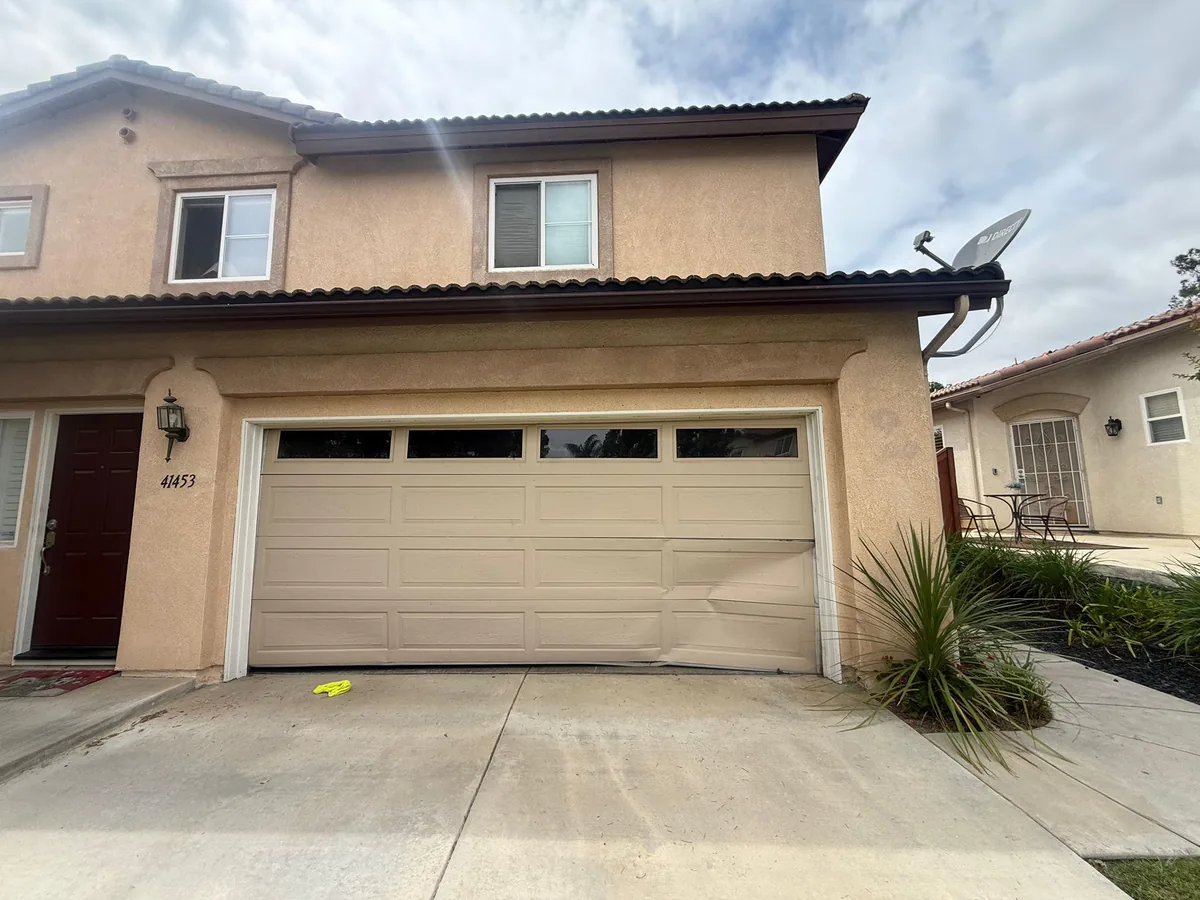
A broken garage door in San Diego is more than an inconvenience. It can trap a car inside the garage, leave your home wide open to the street, or drop a hundred plus pounds of steel at your feet if the wrong part fails. The good news is that most failures come down to a short list of parts, and almost every one of them can be diagnosed in the first minute you stand in front of the door. This guide walks you through exactly what to check, what to leave alone, and what a fair repair costs in the San Diego market in 2026.
Noah Garage Doors is a locally owned repair company serving every ZIP code in San Diego County, from downtown and North Park to Chula Vista, La Mesa, Poway, Escondido, Encinitas, Carlsbad, and Oceanside. We answer the phone 24/7 and offer same-day service, honest upfront pricing, and the manufacturer's warranty on every part we install.
First: Stop and Assess the Door
Before you press the wall button again or yank on the manual release, take thirty seconds to look at the door. A broken door will tell you what is wrong if you know where to look.
- Look at the springs above the door. If you see a visible gap in a torsion spring, or one spring hanging loose while the other is intact, that is a snapped spring. Do not try to open the door. It now weighs 150 to 250 pounds with no counterbalance.
- Look at the cables running along each side. A frayed, unwound, or dangling cable means the door has lost lift support on that side and can rack sideways.
- Look at the horizontal tracks. If a roller has jumped out or the track is bent, the door will not travel cleanly. Forcing it usually bends more panels and hardware.
- Listen for a hum from the opener with no motion. That is almost always a broken spring, a stripped drive gear, or a failed capacitor. Our full walkthrough is in the guide on garage door opener repair.
- Check the photo-eye sensors near the floor. If one has a solid light and the other blinks, the door will refuse to close and reverse instead. That is the safety system working, not a broken door.
If the door is stuck open and you cannot get it closed, do not leave it that way overnight. Rope off the opening, keep pets and children away from the moving path, and call for emergency service. Our 24/7 emergency garage door repair team handles this exact scenario across San Diego County every week.
The Six Most Common Ways a Garage Door Breaks
After thousands of repairs across San Diego, the failures fall into six buckets. The first three are the ones we see almost daily.
1. Broken Torsion Spring
Springs are rated for roughly 10,000 to 15,000 cycles. A typical San Diego household hits that in 7 to 12 years. You will hear a loud bang when it fails, and the door usually will not lift more than a few inches after.
2. Snapped or Frayed Cable
Lift cables wrap around a drum at the top corner of the door. When a strand frays and lets go, the door tilts, drops on one side, and often jumps off track. Coastal salt air speeds this up in beach neighborhoods.
3. Opener Failure
The motor unit itself can lose a drive gear, capacitor, logic board, or belt. Post power outage failures and remote signal dropouts are common in East County and the backcountry.
4. Off-Track Door
A hit from a car bumper, a snapped cable, or a broken roller can pop the door out of its track. Never try to force it back. Panels bend in ways that cannot be straightened.
5. Bent or Cracked Panel
A backing car, a strong Santa Ana wind gust, or years of UV cracking a wood-look door can knock a single panel out of alignment. Most single-panel damage can be repaired without a full door replacement.
6. Bad Safety Sensors
A door that closes an inch and then reverses is almost always a sensor problem, not a broken door. Sun glare, misalignment, and a dead LED are the top three causes.
San Diego Climate and Neighborhood Factors
San Diego is not one climate. It is a dozen microclimates stacked against 70 miles of coastline and 30 miles of inland canyon. What breaks a door in Ocean Beach is not what breaks a door in Alpine or Rancho Bernardo.
- Coastal neighborhoods (La Jolla, Pacific Beach, Ocean Beach, Point Loma, Coronado, Del Mar, Encinitas, Carlsbad). Salt air corrodes springs, cables, hinges, and rollers faster than anywhere else in the county. A spring that lasts 12 years inland can snap at 7 years here. Cables often fail from surface rust rather than cycle count.
- Inland heat zones (El Cajon, Santee, Lakeside, Ramona, Poway, Escondido). Summer garage temperatures push past 110 degrees. Rubber weather seals crack, plastic opener components go brittle, and lubricants dry out. Annual lubrication makes a real difference here.
- Wind and Santa Ana events (backcountry, Alpine, Jamul, Ramona, and hillside neighborhoods). Strong offshore winds slam doors against stops, bend top sections, and tear weather stripping. After a big wind event we get a wave of off-track and panel calls.
- Marine layer neighborhoods (Clairemont, Kearny Mesa, Mira Mesa, University City). Not oceanfront, but still fog-heavy most mornings. Opener control boards eventually fail from condensation, and hinges squeak year-round without lube.
Regardless of which zone you live in, an annual tune-up is the single cheapest thing you can do to prevent a broken door. Our maintenance and tune-up service lubricates every hinge and roller, tests spring balance, adjusts opener force limits, and flags parts that are close to failing.
Repairs You Can and Cannot Do Yourself
Some parts of a garage door are safe to touch. Others will hurt you. Here is a plain rundown, but you can also read the deeper breakdown in our post on DIY vs professional garage door repair.
Safe for a Careful Homeowner
- Replacing remote batteries and reprogramming a remote.
- Cleaning and realigning the photo-eye safety sensors.
- Lubricating rollers, hinges, and springs with white lithium or silicone grease (never WD-40 as a long-term lubricant).
- Tightening loose lag bolts on hinges and track brackets with a hand wrench.
- Resetting the opener after a power outage.
Call a Professional
- Anything involving the torsion spring. The spring stores hundreds of pounds of force. Loose spring winding bars have broken wrists, jaws, and skulls. Leave spring repair and replacement to a tech with the correct bars, gloves, and calibrated tension charts.
- Cable replacement. Cables carry the door's weight when the spring is unwound. Removing one under tension can send the drum spinning across the garage. Noah handles cable repair in a single visit with the door safely locked out.
- Off-track doors. Panels bend on the way back into the track. Our off-track repair service uses the right hardware and lift technique to prevent secondary damage.
- Opener drive gears, logic boards, and belt replacement inside the motor housing.
2026 Repair Costs for a Broken Door in San Diego
Prices below reflect current San Diego County market rates and match what we quote in the field. Every job gets a firm written total before any tools come out, and there are no charges added after the fact.
| Repair | Typical Cost Range (2026) |
|---|---|
| Torsion spring replacement (single spring) | $220 to $450 |
| Torsion spring replacement (double door or two springs) | $380 to $650 |
| Opener repair | $125 to $350 |
| Opener replacement (supply and install) | $450 to $950 |
| Cable replacement (pair) | $150 to $300 |
| Off-track door repair | $150 to $400 |
| Roller replacement (full set) | $150 to $300 |
| Safety sensor repair or replacement | $95 to $200 |
| Tune-up and safety inspection | $99 to $199 |
| New garage door, installed | $1,200 to $4,500 |
Every part carries the manufacturer's warranty. Our labor is guaranteed as well: if a repair we made fails within a reasonable period due to our workmanship, we come back at no charge. For jobs outside this list, such as a panel swap or a full new garage door installation, we walk the door with you and give you the exact number before quoting the work.
Frequently Asked Questions
No. A broken garage door should not be operated until a technician has inspected it. Springs and cables are under extreme tension, and forcing a door with a snapped spring, broken cable, or bent track can crush hands, damage the opener, and send the door falling. If the door is stuck open, keep people and pets away from the opening and call for same-day service.
In most cases Noah can be on-site the same day you call, and we answer 24/7 for true emergencies like a door stuck open or a snapped spring blocking a car in the garage. We serve every neighborhood in San Diego County, from Chula Vista and La Mesa to Poway, Carlsbad, and Oceanside. Call (619) 572-4266 any time.
Typical 2026 San Diego prices: torsion spring replacement $220 to $450 for a single spring, $380 to $650 for a double door; opener repair $125 to $350; opener replacement $450 to $950; cable replacement $150 to $300; off-track repair $150 to $400; roller replacement $150 to $300; safety sensor repair $95 to $200. Every job gets a firm written quote before any work begins.
Most broken doors are worth repairing. Springs, cables, rollers, hinges, and openers are all replaceable parts, and even a bent panel can often be swapped out without changing the rest of the door. Full replacement usually only makes sense when the door itself is 20 plus years old, has structural damage across multiple panels, or the customer wants to upgrade to an insulated model. We give you both numbers before you decide.
Our Garage Door Services in San Diego
About Noah Garage Doors: Locally owned and operated, serving all of San Diego County. Call or text (619) 572-4266 or email Noahgaragedoors@gmail.com.