Garage Door Hinge Replacement in San Diego
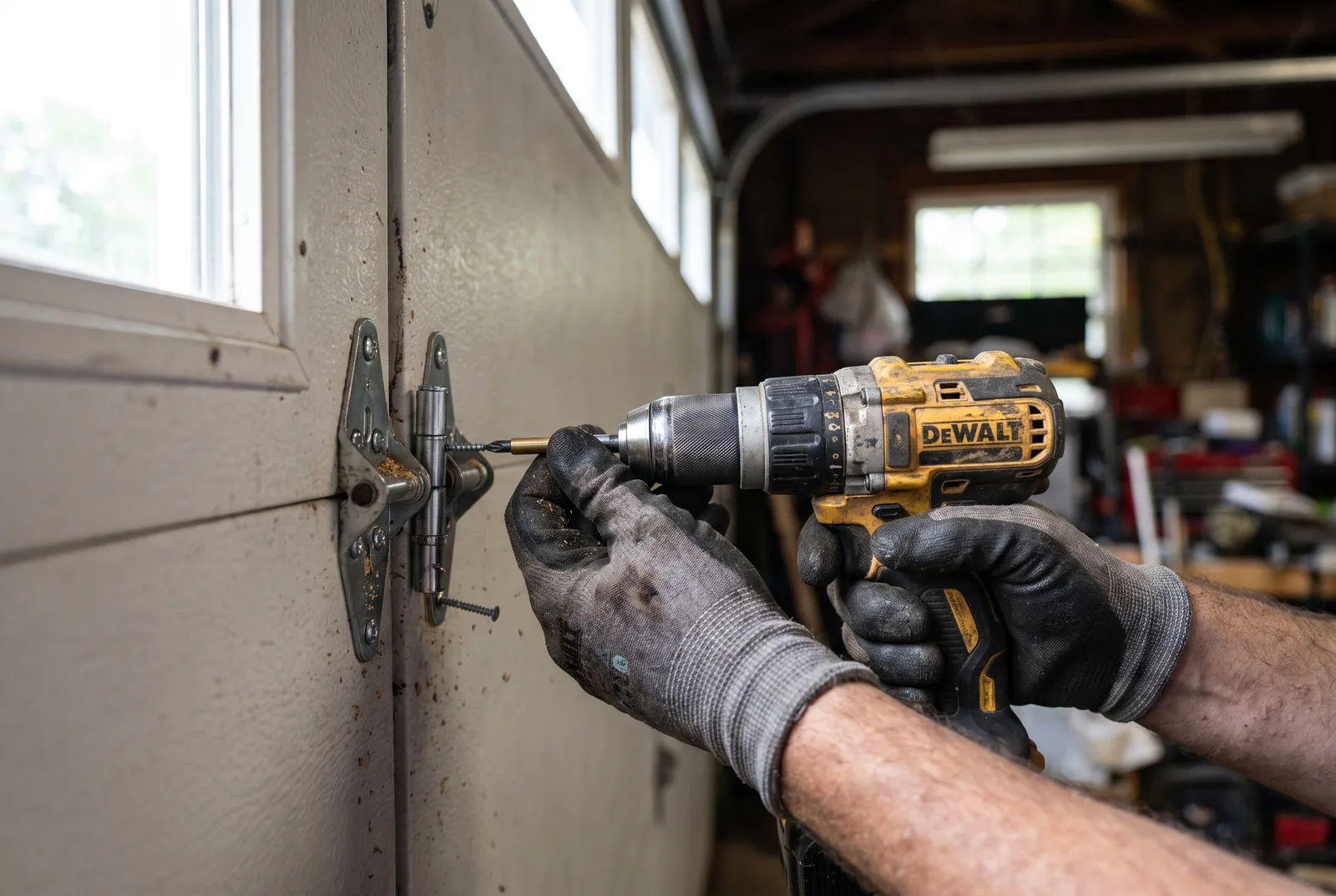
Garage door hinges are the steel pivot brackets that connect each horizontal panel to the next, allowing the door to fold as it travels up the track. A standard two-car door has 10 to 14 hinges depending on panel count, and each one flexes thousands of times per year. Over time, the pivot holes wear oval, the metal cracks, or corrosion locks the pivot pin in place. When that happens, the door starts to grind, sag, or bind mid-travel. Hinge replacement is one of the simpler repairs Noah handles across San Diego County, and catching worn hinges early prevents the far costlier problems that follow when a failing hinge causes the door to go off track.
What Garage Door Hinges Do
Each hinge bridges two adjacent door panels at their shared edge. A short steel pin runs through a sleeve at the pivot point, allowing the panels to rotate relative to each other as the door follows the curved section of track from vertical to horizontal. Hinges also carry lateral load from the track system, keeping each panel aligned as it moves. When any one hinge wears out, the panels it connects begin to flex unevenly, transferring stress to adjacent hardware including rollers, the track, and ultimately the torsion spring on every cycle.
One related piece of hardware worth knowing about: the bottom-corner bracket. It is not a hinge, but it anchors the lift cable to the bottom panel and sits under constant spring tension. It should only be removed or replaced by a professional, full stop. If you see cracking or bending near the bottom corner of your door, call before touching anything.
Signs Your Hinges Need Replacing
Hinge wear happens slowly, which makes it easy to overlook until the problem is well advanced. These are the signals to watch for:
- Grinding or scraping at one spot on the door. A worn pivot hole lets the roller stem rock instead of rotating cleanly. The result is a rhythmic scrape or clunk that follows the door up and down the track every cycle.
- The door shakes or wobbles laterally. A hinge that has cracked at its mounting flange loses its grip on the panel. The door will wiggle side to side as it moves, and eventually the panel separates from the hinge entirely.
- Visible cracks, bends, or rust on the hinge body. Look along both sides of the door with a flashlight. A hinge with a visible crack across the flange or severe rust pitting at the pivot needs to come off before it fails under load.
- One panel sits lower than the ones above it. A hinge with a stretched pivot hole on the left side will let the left edge of that panel drop, giving the whole door a crooked appearance from straight on.
- The door has come off track. A failed hinge is one of the most common causes of an off-track garage door. If your door has derailed even once, every hinge on the door should be inspected before it goes back into regular service.
Hinge Types and Gauge Explained
Garage door hinges are numbered by their load rating. The number stamped on each hinge is not a brand code; it indicates where on the door that hinge belongs and how much weight it is rated to carry.
Number 1 and 2 Hinges
Used on the lower and middle panel joints of standard single-car and lighter double-car doors. Number 1 goes at the first joint from the bottom, number 2 at the second. Lighter gauge steel, sized for the shorter lever arm at those positions.
Number 3 and Higher Hinges
Required at the upper panel joints on heavier double-car doors and on any door with a high daily cycle count. Thicker gauge steel, wider flanges, and reinforced pivot sleeves. Using an undersized hinge at these positions is one of the most common installation errors Noah corrects.
When replacing hinges, we always match or upgrade the original gauge. Using a lighter hinge to save a few dollars on parts is false economy: an underweight hinge bends under load, begins to pull its mounting screws, and eventually fails. We also inspect the backing material behind each hinge mount. A hinge is only as strong as the surface it is fastened to, and rotted or splitting panel material around the mounting holes requires attention before new hinges will hold long-term.
Related Repair Costs in San Diego
Hinge replacement pricing depends on the number of hinges, the gauge required, and whether rollers or other hardware need attention at the same visit. We provide a firm quote after a free on-site assessment before any work begins. Services commonly combined at the same visit have the following price ranges:
| Service | Price Range | Notes |
|---|---|---|
| Hinge replacement | Quoted on-site | Depends on hinge count, gauge, and panel condition; free assessment before any work |
| Roller replacement, full set | $150 to $300 | Often done at the same visit, since hinges and rollers wear together |
| Maintenance and safety tune-up | $99 to $199 | Includes lubrication, balance check, and full hinge and hardware inspection |
| Off-track door repair | $150 to $400 | Required if a failed hinge caused the door to derail |
Many homeowners discover hinge wear during a routine maintenance tune-up. That is the ideal scenario: a simple hinge swap when the door is still working costs far less than combining hinge replacement with off-track repair after a hinge actually fails mid-cycle.
DIY vs Professional Hinge Replacement
Middle hinges on the upper panels can be replaced by a careful homeowner, provided the door is fully closed, resting on the floor, and the opener is disconnected. The pivot pin slides out, the old hinge unbolts from the panel, and the new one goes in. The work is not complicated if you have the right gauge hinge on hand and the door is under no spring tension at that point.
The situation changes at the bottom-corner brackets. Those anchor the lift cables that connect directly to the spring system, and a loaded spring stores hundreds of foot-pounds of energy. Any work near the cable attachment point carries a serious injury risk and belongs with a professional every time. If you are not certain which piece is a middle hinge and which is a bottom bracket, the safe call is to schedule a service visit. Noah is available 24/7 across San Diego County and can typically be there the same day.
How San Diego's Climate Affects Hinges
San Diego's climate is mild overall, but specific conditions in different neighborhoods have a real impact on how quickly hinges corrode and wear.
Coastal zones. Neighborhoods like Ocean Beach, Pacific Beach, La Jolla, and Coronado see salt-laden air year-round. Standard galvanized hinges hold up for several years, but once the zinc coating scratches through at the pivot point, bare steel corrodes quickly in that environment. We regularly see hinges in coastal areas that look fine from the street but are deeply rusted at the pivot hole, where steel-on-steel contact wears away the protective coating first. If you live near the water and have the original hinges, upgrading to stainless or heavy-gauge galvanized hardware at replacement time is worth the small premium.
Inland heat corridors. El Cajon, Santee, La Mesa, and the broader East County see summer temperatures that regularly top 95 degrees. Metal expands in that heat, and hinges on older doors installed without enough clearance will bind and scrape on the hottest afternoons. Lubrication twice a year reduces the problem significantly. We always lubricate hinges as part of the service when replacing them, and recommend combining the visit with a full maintenance check for doors in these areas.
Older housing stock across the county. Homes in Normal Heights, North Park, City Heights, older parts of Chula Vista, and many other San Diego neighborhoods were built with builder-grade hinges rated for perhaps 10 to 15 years of daily use. If your home is more than 15 years old and the hinges have never been serviced, they are overdue for inspection even if they have not started making noise yet. Worn hinges quietly transfer extra stress to the opener motor on every cycle. Replacing them early is one of the most cost-effective ways to extend the life of the whole door system.
Frequently Asked Questions
Most residential garage door hinges last 10 to 20 years under normal use. Hinges in coastal San Diego neighborhoods, where salt air accelerates corrosion, may show wear sooner. Heavy doors, high-cycle use, and skipped maintenance all shorten hinge life. Inspecting them once a year is a good habit.
Middle and top hinges on most residential doors can be swapped by a careful homeowner when the door is fully closed and supported on the floor. However, the bottom-corner bracket, which anchors the cable drum under high spring tension, should only be handled by a professional. If a hinge is cracked near that bracket, call a pro.
Hinge gauge depends on the weight and height of your door. Standard single-car doors typically use number 1 and number 2 hinges for the lower sections. Heavier double-car doors and taller panels often require number 3 or higher at the top sections. Matching the right gauge matters: an underweight hinge will bend and fail prematurely, which can cause the door to go off track.
Hinge replacement cost depends on the number of hinges, their gauge, and whether rollers or other hardware need attention at the same time. Noah Garage Doors provides a firm quote after a free on-site assessment before any work begins. Call (619) 572-4266 for a same-day visit.
Our Garage Door Services in San Diego
About Noah Garage Doors: Locally owned and operated, serving all of San Diego County. Call or text (619) 572-4266 or email Noahgaragedoors@gmail.com.