Garage Door Weather Seal Replacement in San Diego
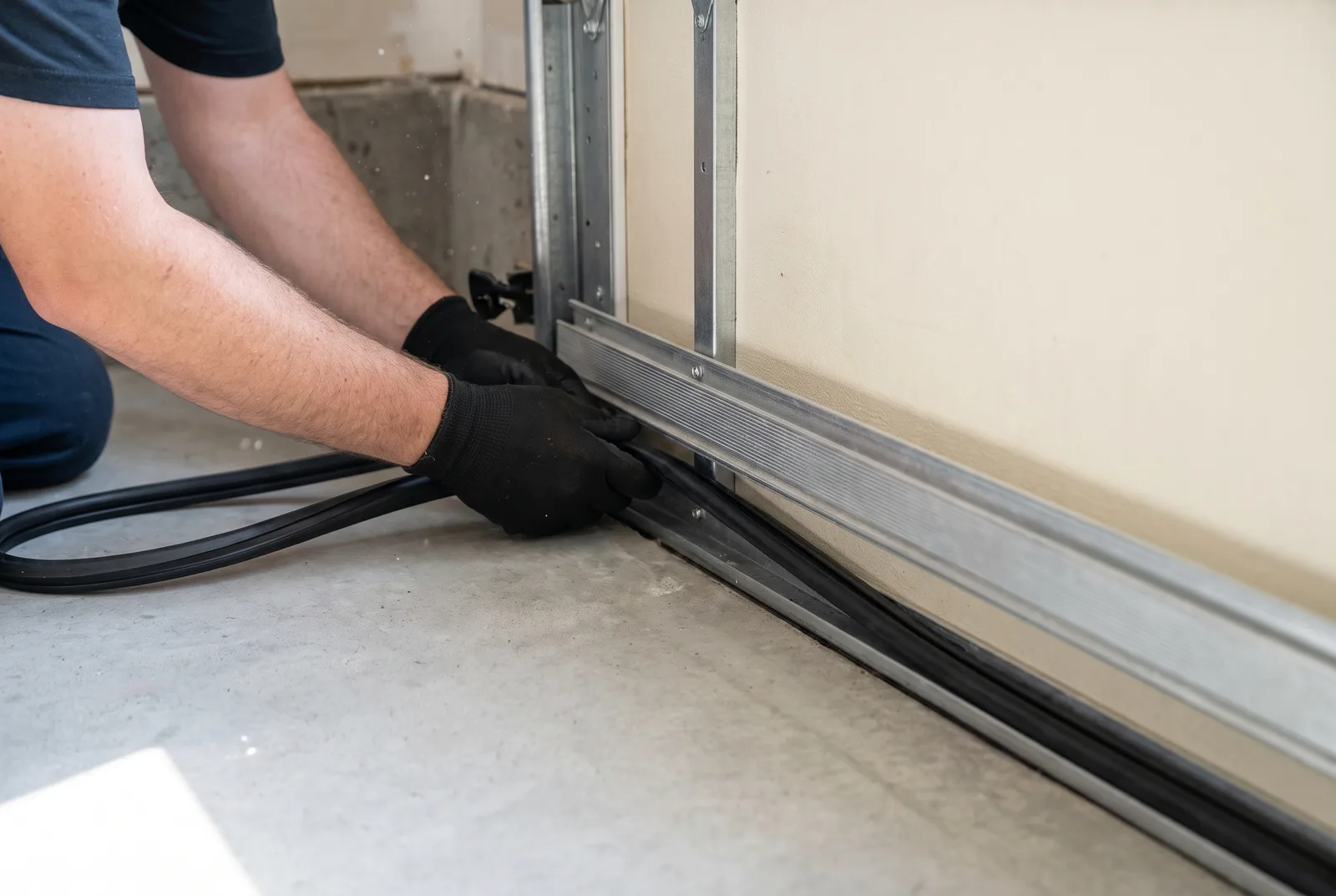
If you can see daylight around the edges of your closed garage door, feel a draft on a windy day, or notice dust and bugs creeping into the garage despite the door being shut, worn weather seals are almost certainly the cause. Garage door weather seal replacement is one of the more affordable maintenance jobs on any residential door, and the difference is immediately noticeable: the garage stays drier and cleaner, pests have no easy entry point, and your home's energy efficiency improves. In San Diego, where coastal air, intense UV, and periodic winter rains all put rubber and vinyl to the test, keeping these seals in good shape is well worth the attention.
Why Weather Seals Wear Out Faster in San Diego
San Diego's climate feels mild, but it is genuinely hard on the rubber and vinyl materials used in garage door seals. The specific stress depends on where in the county you live.
Coastal neighborhoods like La Jolla, Encinitas, Mission Beach, and Coronado deal with persistent marine layer moisture and salt air. Salt accelerates the breakdown of rubber compounds, causing seals to crack, shrink, and lose flexibility faster than they would in an inland or dry climate. Homes within a mile of the ocean can see seals deteriorate noticeably in as little as three to five years if the material quality is low.
Inland areas face a different set of conditions. El Cajon, Santee, Spring Valley, and Poway all experience summer highs that regularly top 95 degrees Fahrenheit. Extreme heat softens and deforms vinyl seals, and the daily cycle of hot afternoons and cooler mornings stresses the material through repeated expansion and contraction. UV radiation is also relentless year-round at San Diego's latitude, drying out and bleaching rubber regardless of how close to the coast you are.
The result: seals that might last a decade in a more temperate climate often reach the end of their useful life in five to eight years here. Pairing seal replacement with your scheduled garage door maintenance visit is the easiest way to catch wear before it causes bigger problems.
Types of Garage Door Weather Seals
A standard residential garage door uses four separate sealing points, and they can wear at different rates. Here is what each one does.
Bottom Seal
A flexible rubber or vinyl strip that runs the full width of the door's lower edge. It compresses against the concrete floor when the door closes, blocking water, debris, and pests. This is the seal that wears fastest because it takes the most physical contact.
Side Seals
Vertical strips mounted to the left and right door frame stops. They close the gap between the door's edge and the frame. On doors that are slightly out of square, side seals do heavy work compensating for the gap.
Top Seal (Header Seal)
A horizontal strip along the top of the door frame that seals the gap between the door and the header when the door is closed. Less prone to wear than the bottom seal, but UV cracking is common on south-facing garages.
Threshold Seal
An optional floor-mounted rubber strip that bonds to the concrete and forms a raised barrier for the bottom seal to press against. Useful for garages with an uneven or sloped floor. Not all doors have one, but adding one significantly improves water resistance.
Signs Your Weather Seal Needs Replacing
Weather seal problems are usually easy to spot if you know what to look for. The fastest check is to go inside your garage, close the door, and look for light coming in around the perimeter. Even a thin sliver of light means outside air, water, and pests have a path in.
Other signs to watch for:
- Visible cracking or brittleness. Seals that have dried out from UV exposure will show surface cracks. If a section of the bottom seal crumbles when you press it, it is no longer doing its job.
- Flat or compressed profile. A bottom seal that has been compressed flat by years of contact with the floor no longer springs back. Run your hand along it: if it feels hard and rigid rather than soft and pliable, it is past its prime.
- Water on the garage floor after rain. If you see a puddle inside the door after a winter storm, the bottom seal is almost certainly the entry point. San Diego's heaviest rains come between November and March, so fall is a good time to inspect.
- Insects and rodents inside the garage. Rats and mice need only about a half-inch gap to enter. A worn or torn bottom seal is a common entry point, particularly in neighborhoods near canyons like Tierrasanta, Rancho Penasquitos, and Mission Trails.
- Audible wind noise when the door is shut. A whistling or rattling sound during Santa Ana wind events usually points to a gap on the sides or top where the seal is no longer making full contact.
The Replacement Process
Replacing a garage door weather seal is not complicated, but doing it right requires the correct seal profile for your door and a careful fit against the floor. Here is what the process looks like when Noah comes out.
- Assessment. Noah checks all four sealing surfaces: bottom, sides, top, and floor threshold if present. Even if you called about the bottom seal, it is worth checking the others while the door is being worked on, since they often wear together.
- Profile matching. Bottom seals come in several cross-section profiles: T-slot, nail-on, and retainer styles. The wrong profile will not seat correctly in the door's bottom retainer. Noah identifies your door's retainer type before cutting any material.
- Measurement and cutting. The seal is cut to the exact width of your door, not left long and bent at the ends (a common shortcut that creates corner gaps). For doors on an uneven or sloped floor, the bottom of the door may need to be shimmed or the seal tapered to maintain contact across the full width.
- Installation and testing. The new seal is secured, the door is cycled several times to confirm even contact across the full width, and the gap test (looking for light from inside with the door closed) is done before Noah leaves.
- Related checks. While the door is being serviced, Noah will also check the springs, cables, and rollers. A door that is sagging on one side may look like a seal problem but can actually point to a worn spring or cable that needs attention. Catching those issues early prevents a call for emergency repair later.
What Drives the Cost
Weather seal replacement is one of the more straightforward garage door jobs in terms of labor, but the total cost varies depending on which seals need replacing and what profile your door requires. Since pricing depends on these specifics, the exact cost is quoted after a free on-site assessment. No surprises, no estimates that turn out to be wrong when the job actually starts.
The table below shows the main factors that affect the scope and cost of each seal type.
| Seal Type | What Drives the Cost | Typical Wear Pattern |
|---|---|---|
| Bottom seal | Profile type (T-slot vs. nail-on vs. retainer), door width, floor unevenness | Flattens and cracks within 5-8 years; most frequent replacement |
| Side seals | Frame condition, whether stops need renailing before new seal attaches | Pulls away from frame over time; often replaced together with top seal |
| Top seal | Header clearance, whether the door sits flush or has a small gap to close | UV cracking on south-facing garages; otherwise long-lasting |
| Threshold seal | Adhesive bond to concrete condition, door width, floor slope | Peels at edges after 5-10 years; may require concrete prep before rebonding |
| Full perimeter replacement | All four points done in one visit; most cost-effective when all seals are worn | Recommended when door is 8+ years old and seals have never been replaced |
One factor that surprises some homeowners: if the door's bottom retainer bar is bent or corroded, it needs to be replaced before a new seal can seat properly. This adds a bit of time but is worth doing right, since a new seal in a damaged retainer will gap at the edges. Noah will let you know during the assessment if that applies to your door.
Frequently Asked Questions
The clearest signs are visible daylight around the edges of your closed door, drafts inside the garage, water pooling near the bottom after rain, insects or rodents finding their way in, or a seal that is visibly cracked, flattened, or pulling away from the door. A quick visual inspection from inside the garage with the door closed will usually reveal the problem.
A standard garage door has four sealing points: the bottom seal (a rubber or vinyl strip along the door's lower edge), two side seals (vertical strips on the door frame sides), and a top seal (a horizontal strip along the header). Some homes also add a floor threshold seal for extra protection. Each seal wears differently, and it is common to replace just one type at a time.
In San Diego, rubber and vinyl seals typically last five to ten years depending on material quality and sun exposure. Coastal areas like La Jolla and Encinitas see faster degradation from salt air and UV, while inland areas like El Cajon and Santee put seals through repeated heat cycles that cause cracking. Checking seals annually during a regular maintenance visit helps catch wear before it becomes a problem.
The bottom seal on many doors can be a DIY project if you are comfortable working in a tight space and can source the correct seal type for your door. Side and top seals are simpler still since they just nail or screw onto the door frame. That said, fitting a bottom seal correctly so it sits flush on an uneven concrete floor takes some patience, and the wrong fit will leave gaps. If you are unsure, having a professional measure and install it guarantees a tight seal the first time.
Our Garage Door Services in San Diego
Related Guides
About Noah Garage Doors: Locally owned and operated, serving all of San Diego County. Call or text (619) 572-4266 or email Noahgaragedoors@gmail.com.