How to Program a Garage Door Remote: San Diego Guide
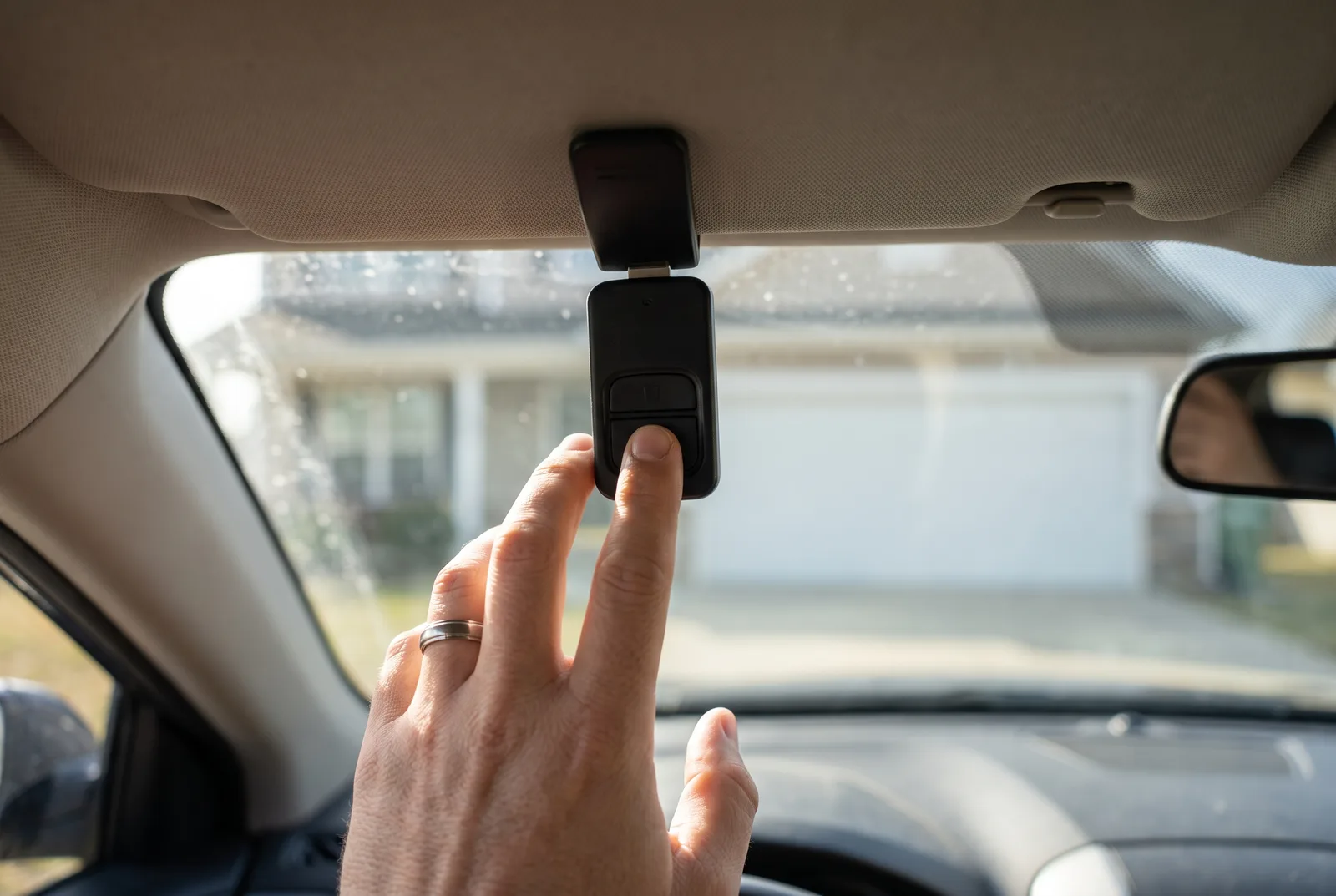
Programming a garage door remote takes about 60 seconds when you know where to look. Whether your remote stopped responding after a battery swap, you just bought a replacement, or you want to add a second remote for another family member, the process is essentially the same across brands. This guide covers the standard steps, notes the small differences between LiftMaster, Genie, and other brands common in San Diego homes, and explains what to check when the remote still does not cooperate after programming.
How Garage Door Remote Programming Works
Modern openers and remotes communicate by radio frequency, typically 315 MHz or 390 MHz. When you press the Learn button on the opener, you are putting it into listening mode. Press the remote button within the next 30 seconds, and the opener records that remote's unique code into its memory.
Openers built since the mid-1990s use rolling code technology. The signal changes with every single button press, so recording the code once is not enough to replay it later and open the door. This is a meaningful security improvement over older fixed-code systems, where one intercepted signal was enough. Rolling codes are the reason you have to actively reprogram rather than simply copy a signal from another remote.
Step-by-Step Programming Instructions
These four steps work for the vast majority of openers in San Diego homes, regardless of brand:
- Find the Learn button on the motor unit. Look on the back panel of the opener, near the hanging antenna wire. The button color varies by brand and model: red, yellow, purple, green, and orange are all common. Older units may label it "Program."
- Press and release the Learn button once. An indicator light near the button will turn on or begin blinking. You now have roughly 30 seconds to complete the next step before the window closes.
- Press and hold the remote button you want to program. Hold it until you see the opener lights flash, hear two clicks, or hear a beep. Release immediately when that signal happens.
- Test the remote from a normal distance. Walk to the end of your driveway or across the garage and confirm the door moves. If it does, programming is complete.
If the opener lights never flash during step 3, try moving closer to the motor unit and repeat steps 2 and 3. If the Learn button indicator never lights up at all, the opener may have lost power, or the circuit board may be failing and needs a professional look.
Brand-by-Brand Differences
The four-step method above applies to every major brand, but there are small variations worth knowing before you start.
LiftMaster, Chamberlain, Craftsman
All three share the same engineering platform. Press the Learn button once, then press and hold the remote button until the opener lights flash twice. Chamberlain and Craftsman are consumer-facing names for the same underlying system used in LiftMaster professional openers.
Genie
Genie's sequence requires pressing the remote button twice after activating the Learn button, rather than once. Older Genie openers without a Learn button use a numbered dip switch: match the switch positions on the remote to the positions on the receiver inside the opener housing.
Linear / Multicode
Common in older San Diego condos and gated communities throughout Chula Vista and Mission Hills. These fixed-code systems use a dip switch inside the remote. Set the numbered switches to match the pattern on the opener receiver. No Learn button is needed or present.
Overhead Door / Wayne Dalton
Overhead Door Odyssey openers share Genie's rolling-code platform and follow the two-press sequence. Wayne Dalton openers vary by model. Check the label on the motor unit for the programming frequency and confirm it before purchasing a replacement remote.
When Programming Still Does Not Work
If you have replaced the battery, confirmed the opener has power, and followed the programming steps for your brand and the door still does not respond, the problem has moved beyond the remote itself. These are the four most common causes Noah finds on service calls throughout San Diego County:
Antenna Wire Damage
The antenna wire hangs from the bottom of the motor unit. If it is pinched in the door, cut, or coiled against the housing, signal range drops to inches. Straightening or replacing the wire often restores full range without any other repair needed.
Receiver Board Failure
The circuit board inside the opener stores remote codes and processes incoming signals. When it fails, the opener accepts no new codes regardless of how many times you try. This is the most common electrical failure we see on openers over 10 years old.
LED Light Interference
Certain LED bulbs generate radio frequency interference that blocks the remote signal entirely. The symptom looks exactly like a failed receiver board but disappears immediately when the bulb is replaced with a garage-door-rated LED or a standard incandescent bulb.
Full Opener Failure
When the motor or logic board is beyond repair, no remote will work. A new garage door opener installation is the solution, and modern openers include Wi-Fi and smartphone control at a cost comparable to the older units they replace.
Here is how typical repair costs break down for these issues, based on 2026 San Diego market rates:
| Problem | Likely Service | Typical Cost |
|---|---|---|
| Receiver board or antenna repair | Opener repair | $125 to $350 |
| Safety sensor malfunction blocking all commands | Safety sensor repair or replacement | $95 to $200 |
| Motor or full opener failure | Opener replacement, including installation | $450 to $950 |
All figures above are from our standard 2026 rate schedule. The exact cost depends on your opener model, parts availability, and whether any secondary components need replacing alongside the main repair. We quote the full job in writing before any work begins.
San Diego-Specific Tips
A few local factors make garage door remote problems more common in San Diego than in other parts of the country.
Coastal salt air: Homes in Pacific Beach, Ocean Beach, La Jolla, and Coronado face elevated humidity and airborne salt. Salt deposits form on the battery contacts inside the remote over time, interrupting the signal even with a fresh battery. When you change the battery, wipe the metal contacts inside the compartment with a dry cloth before inserting the new one.
Inland summer heat: In areas like El Cajon, Santee, and Lemon Grove, car interiors can reach 130 degrees Fahrenheit on summer afternoons. Leaving a remote in a hot car over weeks shortens battery life dramatically and can damage the circuit board. Store the remote in a cool location, or use a wall-mounted keypad during the hottest months instead.
LED bulb interference: Many San Diego homeowners replace the incandescent bulb inside their opener with an LED bulb to reduce electricity use. Certain non-rated LED bulbs generate radio frequency interference that cuts remote range to just a few feet. If your remote range dropped suddenly after changing a bulb, that is the first thing to check. Replace the opener bulb with a garage-door-rated LED or a standard 60-watt incandescent to rule it out.
After a power outage: San Diego experiences rolling outages and planned SDG&E shutoffs, particularly in eastern inland communities during high-wind events. Some older openers clear their remote memory during a power interruption, which means remotes must be reprogrammed from scratch when power is restored. Run through the programming steps above before calling for service. If the opener itself is unresponsive after an outage, the 24/7 emergency repair team at Noah Garage Doors can diagnose it same-day.
Regular maintenance helps: A well-maintained opener with clean contacts, properly aligned sensors, and lubricated hardware is far less likely to develop the receiver and board problems described in the previous section. The annual tune-up service covers all of those points and often catches a weakening receiver board before it becomes a no-remote situation.
Frequently Asked Questions
Start with the battery. Most remotes run on a CR2032 or AA battery, and battery life shortens faster in San Diego's heat. Replace the battery first, then test the remote. If it still does not work, try reprogramming using the Learn button on your opener motor unit. If neither step helps, the opener's receiver board or antenna wire may need attention from a technician.
Yes, in most cases. Universal remotes such as the Chamberlain Clicker or Genie Aladdin remote are compatible with most openers manufactured after 1993. Check the packaging for compatibility with your opener brand. Some older dip-switch systems and certain proprietary openers require a brand-specific remote.
Poor range usually points to one of three things: a weak battery, a damaged or coiled antenna wire on the motor unit, or radio frequency interference from an LED bulb inside the opener housing. Replace the battery first. Then confirm the antenna wire hangs straight down from the motor unit. Finally, try swapping the opener bulb with a standard incandescent or a garage-door-rated LED.
Most modern LiftMaster, Chamberlain, and Genie openers can store between 20 and 40 individual codes. You can program multiple remotes, keypads, and even your vehicle's HomeLink or Car2U system, each as a separate code. To erase all stored codes and start fresh, hold the Learn button for about 10 seconds until the indicator light turns off.
Our Garage Door Services in San Diego
About Noah Garage Doors: Locally owned and operated, serving all of San Diego County. Call or text (619) 572-4266 or email Noahgaragedoors@gmail.com.